

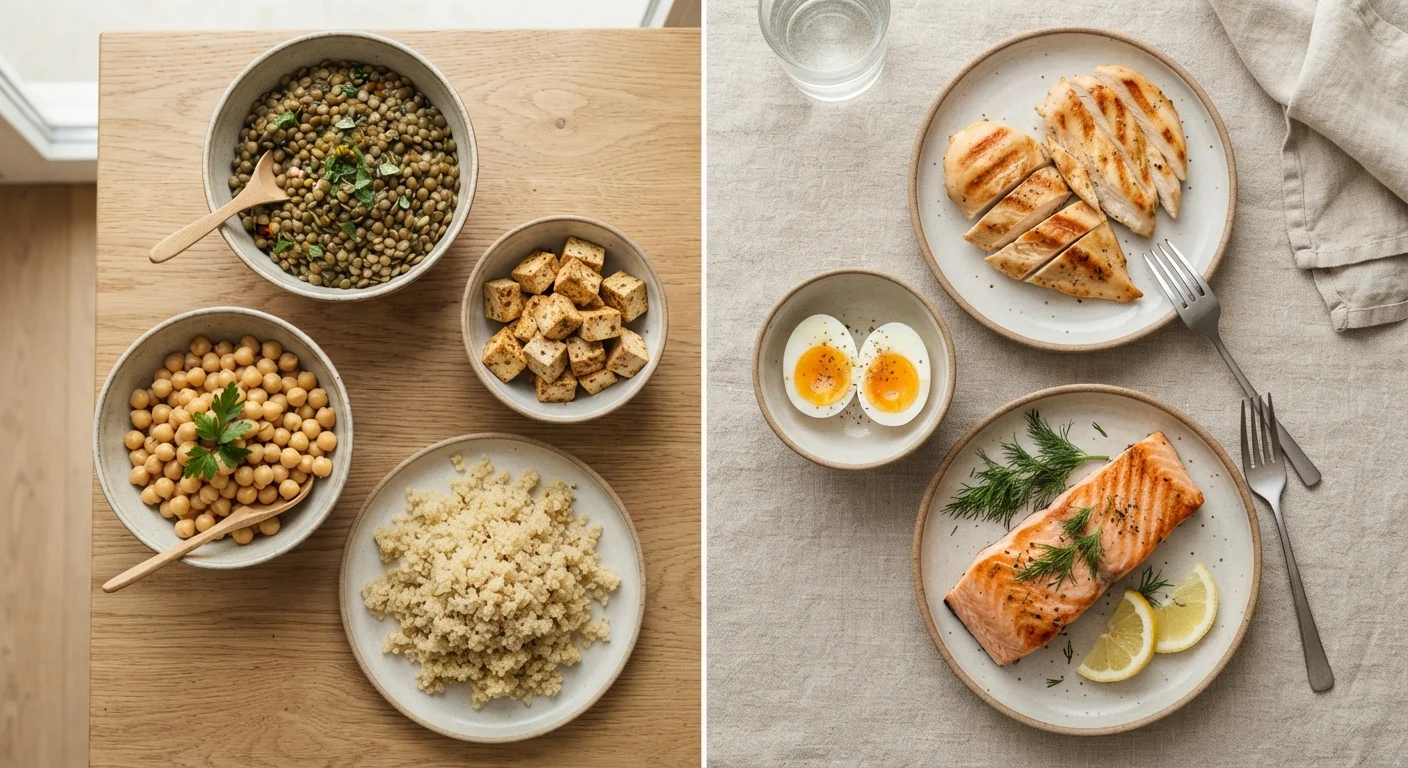
Option A
Animal Protein
The complete, highly bioavailable protein source.
Best for: Individuals seeking complete amino acid profiles and high protein absorption in fewer food choices.
Option B
Plant Protein
The fiber-rich, nutrient-dense protein alternative.
Best for: People pursuing varied diets with added fiber, phytonutrients, and reduced saturated fat intake.
What Makes a Protein 'Complete' or 'Incomplete'?
Proteins are made up of amino acids, nine of which the body cannot produce on its own - these are called essential amino acids. A protein source is considered complete when it supplies all nine in adequate proportions. Animal proteins - including meat, poultry, fish, eggs, and dairy - are universally complete. Most plant proteins, by contrast, are low in at least one essential amino acid, earning them the label incomplete.
This distinction matters practically, but it is less limiting than it sounds. The body draws from a pool of amino acids throughout the day, so eating varied plant foods - say, rice and beans, or hummus with whole-grain bread - across meals can collectively deliver all essential amino acids. Nutrition researchers broadly support the idea that a well-planned plant-based diet meets protein needs for most healthy adults.
Notable exceptions among plant sources include soy foods (edamame, tofu, tempeh) and quinoa, which contain all nine essential amino acids and are considered complete plant proteins.
Bioavailability: How Well Does Your Body Absorb Each Type?
Not all protein is absorbed equally. Scientists use a measure called the Digestible Indispensable Amino Acid Score (DIAAS) to rate protein quality based on digestibility and amino acid content. Animal proteins - particularly eggs, dairy, and meat - score consistently high. Plant proteins generally score lower, in part because fiber, phytic acid, and other compounds in plant foods can modestly reduce amino acid absorption.
~50%
Lower DIAAS score for many plant proteins vs. animal
Research published in nutritional science journals shows plant proteins often score 40-60% lower on the DIAAS scale compared to eggs or dairy, though preparation methods improve scores.
~1 in 8
Americans identifying as vegetarian or plant-focused
Gallup polling data has consistently found roughly 5-8% of Americans identify as vegetarian, with a larger share reducing meat consumption.
3rd leading
Legumes as global protein source
The Food and Agriculture Organization (FAO) identifies legumes as one of the world's top three dietary protein sources, particularly in lower-income and plant-forward food cultures.
The practical gap is real but manageable. Cooking, soaking legumes, and fermenting soy (as in tempeh or miso) all improve plant protein digestibility. Eating slightly larger portions of plant protein foods can compensate for the absorption difference. For most people eating a varied, adequate-calorie diet, bioavailability differences are unlikely to cause deficiency.
To understand how protein fits into a broader eating pattern, see our guide to whole vs. processed foods, which explains how food processing affects nutritional quality across food groups.
Beyond Protein: What Else Each Source Brings to the Table
Choosing a protein source is never just about grams of protein. Each type carries a distinct nutritional package:
- Animal protein sources provide heme iron (more readily absorbed than plant iron), vitamin B12 (found almost exclusively in animal foods), zinc, and omega-3 fatty acids (particularly in fatty fish). However, red and processed meats are also associated with higher saturated fat and sodium intake.
- Plant protein sources deliver dietary fiber, antioxidants, and phytonutrients largely absent from animal foods. Legumes, for example, are simultaneously a protein source and a significant source of soluble fiber, which supports digestive health and cholesterol management.
People who eliminate or significantly reduce animal proteins should pay particular attention to vitamin B12, calcium, iron, zinc, and omega-3 fatty acids, and may benefit from speaking with a registered dietitian about supplementation or food strategies.
Special Populations: Extra Consideration Needed
Pregnant individuals, older adults, children, and people managing chronic conditions have specific protein needs that differ from general guidelines. If you fall into one of these groups, the general comparisons in this article may not apply directly to your situation. Please consult a registered dietitian or your healthcare provider for personalised guidance.
Building a weekly eating plan that balances both protein types doesn't have to be complicated. Our weekly meal planning checklist offers a practical framework for covering key food groups and nutrients without daily guesswork.
Putting It Together: Practical Guidance for Everyday Eating
The evidence does not point to one universally superior protein source. Rather, it supports a dietary pattern where protein variety - animal, plant, or both - is paired with attention to overall food quality. Here are grounded principles to apply:
| Criterion | Animal Protein | Plant Protein |
|---|---|---|
| Amino acid completeness | Complete (all 9 essential amino acids) | Often incomplete; soy and quinoa are exceptions |
| Bioavailability (DIAAS) | Generally high | Moderate; improved by cooking and preparation |
| Dietary fiber | None | Significant in legumes, whole grains |
| Vitamin B12 | Naturally present | Absent; supplementation often needed |
| Saturated fat | Variable; higher in red/processed meats | Generally low |
| Iron type | Heme iron (highly absorbed) | Non-heme iron (less readily absorbed) |
| Phytonutrients | Minimal | Rich in antioxidants and phytonutrients |
- Prioritise variety. Rotating between protein sources - chicken, lentils, fish, tofu, eggs, beans - broadens your amino acid and micronutrient intake naturally.
- Pair plant proteins strategically. Combining legumes with grains or seeds throughout the day covers amino acid gaps without needing to calculate each meal.
- Watch what accompanies the protein. A grilled chicken breast and a deep-fried one deliver very different nutritional outcomes. Preparation method and accompanying ingredients matter.
- Consider individual needs. Age, activity level, health conditions, and medications all influence how much protein you need and which sources suit you best - a healthcare provider or registered dietitian is the right resource for personalised guidance.
This article is for general informational and educational purposes only and is not a substitute for professional medical or dietary advice. Consult a qualified healthcare professional before making significant changes to your diet.
The content on this site is for informational purposes only and is not a substitute for professional advice. Always consult a qualified professional for guidance specific to your situation.