

Summary
22 items · 30-60 minutes once per week
Why a Weekly Meal Plan Supports Better Nutrition
Consistent, balanced eating rarely happens by accident. Research published in nutrition journals consistently links meal planning to higher diet quality, reduced food waste, and lower household food spending. When you decide what to eat before you're hungry, you're more likely to include vegetables, whole grains, and lean proteins - and less likely to default to heavily processed convenience foods.
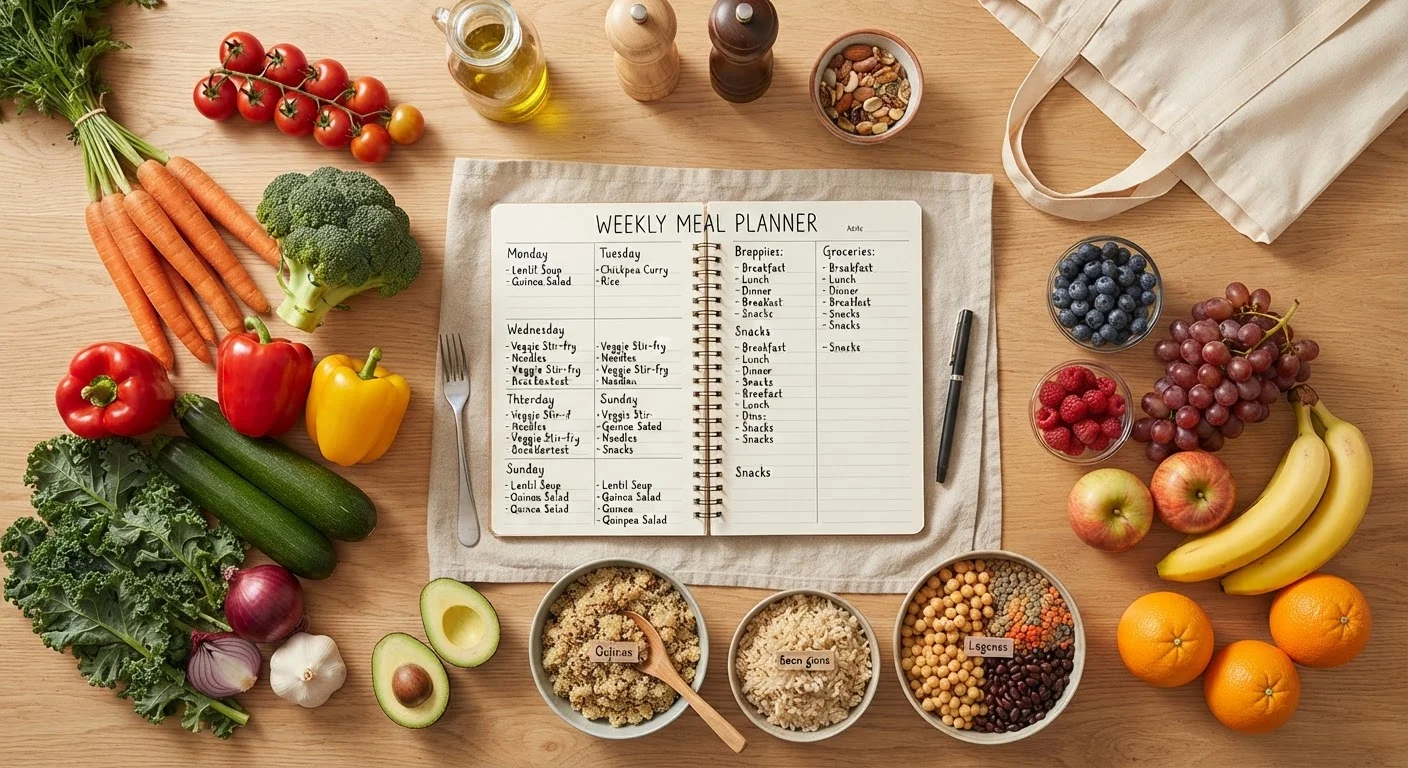
This checklist walks you through every stage of the weekly planning process, from auditing your pantry to prepping staples in advance. Use it as a repeatable weekly routine rather than a one-time exercise. For guidance on building each meal itself, see our balanced plate guide, which uses visual cues instead of calorie counting.
Keep in mind: this article offers general nutrition education, not personalized dietary advice. If you have a chronic health condition, food allergy, or specific medical need, work with a registered dietitian or your healthcare provider.
Pantry and Fridge Audit
Meal Mapping
Nutritional Coverage Check
Grocery List and Shopping
Batch Prep
Tools That Make Planning Easier
You don't need expensive apps or equipment, but a few simple tools keep the process consistent and reduce the time it takes each week.
Weekly meal planning template (paper or digital)
Provides a visual grid to map out each day's meals and confirm food group coverage at a glance.
Grocery list app or notepad
Organizes shopping by store section, reducing backtracking and forgotten items.
Airtight meal-prep containers
Store prepped grains, vegetables, and proteins safely for use throughout the week.
Kitchen scale
Helps gauge portion sizes for proteins and grains without relying on calorie counting.
Registered Dietitian (RD) consultation
Provides personalized guidance if you're managing a health condition, food allergy, or specific nutritional goal.
If you're also trying to keep grocery costs in check, our budget-friendly nutrition guide pairs well with this checklist - it highlights affordable staples like dried beans, oats, and frozen vegetables that fit naturally into a balanced weekly plan.
Avoid Over-Engineering Your Plan
Plans that require cooking a different elaborate meal every day are difficult to sustain. Aim for variety across the week, not within every single day. Repeating a lunch two or three times is a normal, practical strategy - not a nutritional shortfall. Rigidity is one of the top reasons people abandon meal planning within the first month.
Reading Labels as You Plan
Meal planning is also the right moment to evaluate the packaged foods you regularly reach for. Sodium and added sugar are the two nutrients most Americans consume in excess, according to federal dietary guidelines. When you're building your meal map for the week, cross-reference the foods you plan to buy against their Nutrition Facts panels.
Key things to check: serving size (everything else on the label is based on it), sodium (aim for products under 600 mg per serving for most meals), and added sugars (listed separately from total sugars on current U.S. labels). For a plain-language breakdown of every line on the panel, see how to read a Nutrition Facts label.
Protein source also matters. If you're debating whether to lean on animal or plant proteins for the week, understanding the trade-offs between animal and plant protein can help you make an informed choice based on your dietary context.
Special Populations: Consult a Professional First
If you are pregnant, breastfeeding, managing diabetes, kidney disease, cardiovascular disease, or any other chronic condition, general meal planning frameworks may not apply to your situation without modification. Nutrient needs, safe food choices, and portion guidance can differ significantly. Please consult a registered dietitian or your healthcare provider before making major changes to your eating pattern.
The content on this site is for informational purposes only and is not a substitute for professional advice. Always consult a qualified professional for guidance specific to your situation.