

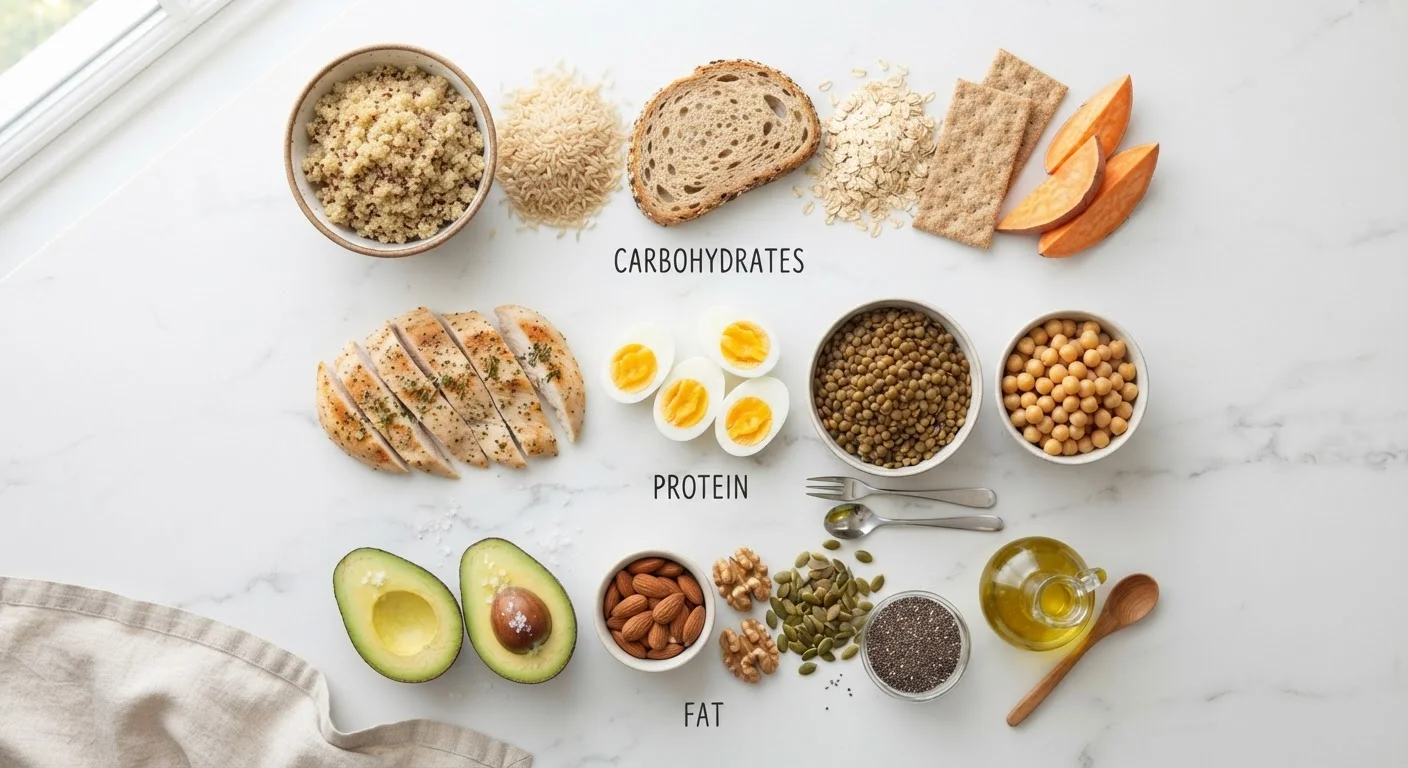
Carbohydrates: Your Body's First Choice for Fuel
Carbohydrates are broken down into glucose - a simple sugar your cells use for energy. Your brain relies almost exclusively on glucose, and your muscles draw on it during physical activity. When carbohydrate intake is sufficient, your body spares protein for its primary jobs: building and repair.
Not all carbohydrates behave the same way in your body. Simple carbohydrates (found in sugar, white bread, and many packaged snacks) digest quickly and can cause rapid shifts in blood glucose. Complex carbohydrates (found in whole grains, beans, and vegetables) digest more slowly, providing steadier energy. Fiber - technically a carbohydrate - passes largely undigested and feeds beneficial gut bacteria. Most Americans fall well short of recommended fiber intake; learn more in our fiber overview.
The takeaway: carbohydrates themselves are not the problem. The source and degree of processing matter significantly. Our article on whole foods vs. processed foods explores this distinction in more depth.
A Simple Way to Judge Carb Quality
Before choosing a carbohydrate-rich food, check whether it contains fiber. Foods like whole grains, legumes, and vegetables deliver carbohydrates alongside fiber and micronutrients, slowing digestion and supporting gut health. Foods with added sugars and minimal fiber offer energy with little nutritional payoff.
Protein: Builder, Repairman, and Regulator
Protein is made up of amino acids - often called the building blocks of the body. Your body uses them to build and repair muscle tissue, produce enzymes that drive chemical reactions, and manufacture hormones like insulin. Unlike carbohydrates and fat, your body has no dedicated protein storage reservoir, which is why consistent daily intake matters.
Of the 20 amino acids, nine are considered essential - meaning your body cannot make them and must obtain them from food. Complete protein sources (animal products like meat, fish, eggs, and dairy) contain all nine. Incomplete sources (most plant foods) lack one or more, but a varied plant-based diet can easily supply all essential amino acids across the day.
Protein also has a high thermic effect - your body uses more energy to digest it compared to carbs or fat - and it tends to promote satiety, which can help with appetite regulation. This is why protein intake is frequently discussed in the context of weight management, though it is not a magic solution on its own.
~46-56g
Daily protein RDA for most adults
The Dietary Reference Intakes set by the National Academies suggest roughly 46 grams per day for adult women and 56 grams for adult men - though individual needs vary with body weight and activity level.
45-65%
Recommended share of calories from carbohydrates
The Dietary Guidelines for Americans recommend that carbohydrates make up 45-65% of total daily calorie intake for most healthy adults.
20-35%
Recommended share of calories from fat
Major health guidelines suggest fat should account for 20-35% of daily calories, with emphasis on unsaturated sources over saturated fat.
Fat: Essential, Not the Enemy
Dietary fat spent decades as the villain of nutrition science, but a more nuanced picture has emerged. Fat is essential for absorbing vitamins A, D, E, and K - all of which are fat-soluble and cannot enter your bloodstream without it. Fat also forms the structural layer of every cell membrane in your body and is a precursor to many hormones.
The type of fat you eat matters more than the total amount. Unsaturated fats - found in olive oil, nuts, seeds, and fatty fish - are associated with favorable cardiovascular markers in research. Saturated fats (found in red meat and full-fat dairy) should be consumed in moderation according to guidelines from major health organizations. Artificial trans fats, largely removed from the U.S. food supply, are the category most consistently linked to harm.
Because fat provides 9 calories per gram - more than double that of carbs or protein - small amounts go a long way, both nutritionally and calorically. That density makes fat filling, which is part of why very low-fat diets can feel unsatisfying.
Balance Over Elimination: How to Think About Macros Practically
Popular diets often frame macronutrients as villains or heroes - first fat, then carbohydrates. The evidence rarely supports this black-and-white thinking. Research consistently shows that dietary patterns emphasizing whole, minimally processed foods across all macronutrient categories are associated with better health outcomes than any single-macronutrient elimination strategy.
Rather than obsessing over percentages, most people benefit more from asking: Where is this macronutrient coming from? Carbs from lentils behave very differently than carbs from a sugary beverage. Protein from grilled salmon differs nutritionally from processed deli meat. Fat from walnuts is not interchangeable with fat from a deep fryer. If you want to dig deeper into common misconceptions that drive unnecessary food fear, our nutrition myths explainer is a useful next read.
Macronutrient Needs Vary by Individual
Age, activity level, health conditions, and personal goals all influence how much of each macronutrient is right for you. Pregnant individuals, older adults, competitive athletes, and people managing chronic conditions may have meaningfully different requirements. A registered dietitian is the most reliable resource for personalized macronutrient guidance.
This article is for general informational purposes only and is not a substitute for personalized medical or nutritional advice. Consult a qualified healthcare provider or registered dietitian for guidance specific to your health needs.
Frequently Asked Questions
Most people do not need to count macros to maintain a healthy diet. Focusing on whole, minimally processed foods across all three categories is a simpler and sustainable approach. Tracking can be useful for specific athletic or medical goals, but it isn't required for everyday health.
Carbohydrates are not inherently harmful. The quality and source matter more than the category itself - whole grains, legumes, and fruits provide fiber and nutrients alongside carbs. The evidence linking poor diet outcomes to carbohydrates typically involves heavily processed, low-fiber sources.
General guidance from major health organizations suggests roughly 0.8 grams of protein per kilogram of body weight per day for most sedentary adults. Athletes, older adults, and those recovering from illness may have higher needs. A healthcare provider or registered dietitian can give personalized guidance.
No. Dietary fat is a nutrient found in food; body fat is stored energy in your tissues. Your body can store excess calories from any macronutrient - not just fat - as body fat. Healthy dietary fats play essential roles in hormonal and cellular function.
Macronutrients are needed in gram-level quantities and provide energy; micronutrients (vitamins and minerals) are needed in much smaller amounts and support biochemical processes without supplying significant calories. See our <a href="/health/nutrition-basics/micronutrients-a-plain-english-reference-to-vitamins-and-minerals">plain-English micronutrients guide</a> for more detail.
Eliminating or severely restricting a single macronutrient can lead to short-term weight loss, but research generally shows that total calorie balance and diet quality are more important long-term factors. Restrictive approaches are often harder to sustain and may cause nutrient gaps.
The content on this site is for informational purposes only and is not a substitute for professional advice. Always consult a qualified professional for guidance specific to your situation.