
Our Verdict
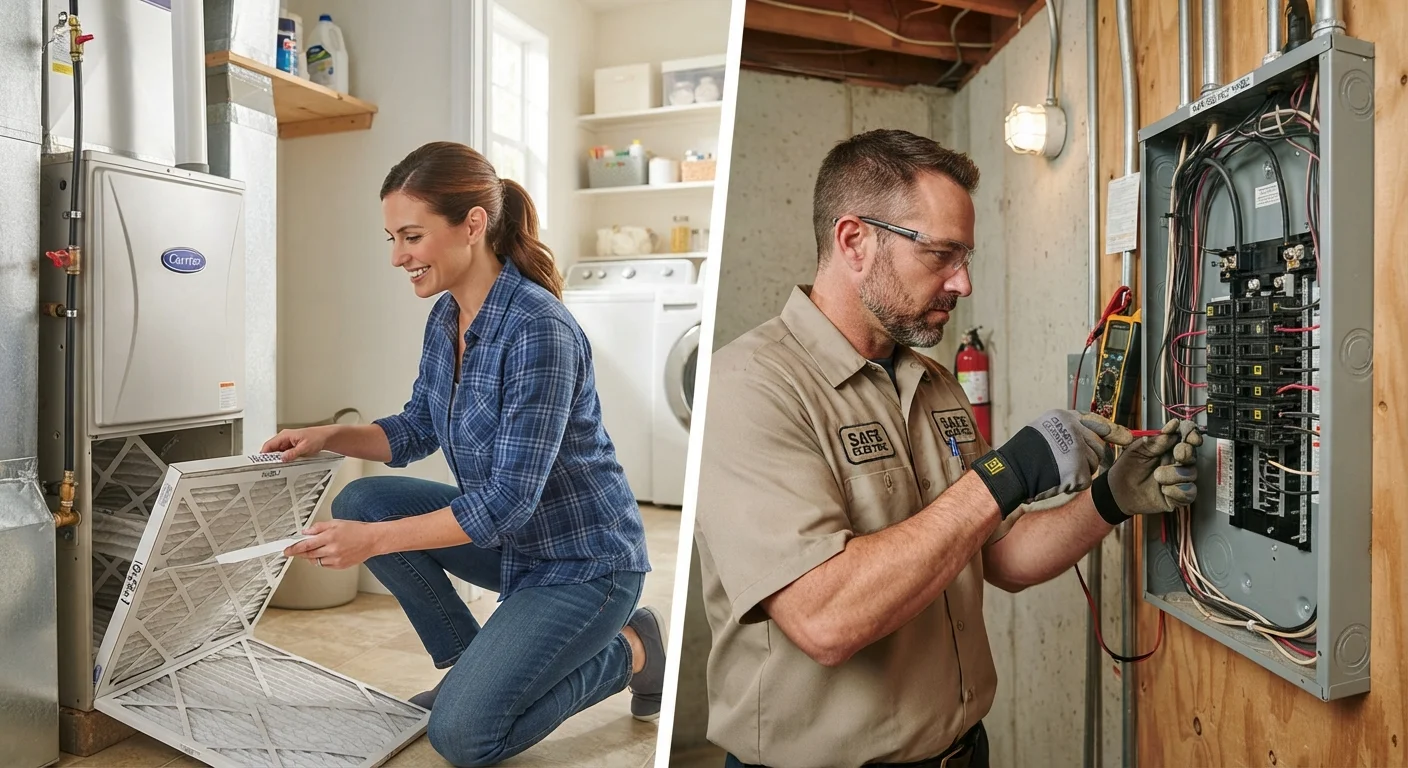
Most routine upkeep - filter swaps, minor caulking, drain care, and simple patching - falls within reach of a handy homeowner with basic tools. However, anything involving your electrical panel, gas lines, structural supports, or work that requires a local permit should be handled by a licensed professional. The real cost of DIY-ing a job that requires a pro isn't just the repair bill - it can include safety hazards, code violations, and insurance complications.
| Best for | Recommended |
|---|---|
| Homeowners comfortable with basic tools and routine upkeep | DIY maintenance tasks |
| Any work involving gas, electrical panels, structural changes, or permits | Licensed professional |
| First-time homeowners building confidence gradually | DIY for low-risk tasks, professional for anything uncertain |
Why the DIY vs. Pro Decision Matters
Homeownership comes with an unending to-do list, and the temptation to handle everything yourself - to save money or simply get it done - is completely understandable. But not every task carries the same risk. Some jobs are genuinely straightforward; others touch systems where a mistake can mean a safety hazard, a failed inspection, or a voided insurance claim.
The goal isn't to frighten you away from doing anything yourself. It's to help you make informed calls. A well-maintained home starts with consistent, routine attention - the kind covered in our seasonal home maintenance calendar - and much of that routine work is completely DIY-friendly.
The key questions to ask before starting any task: Does this involve gas, electricity, or load-bearing structure? Does my municipality require a permit? Could a mistake cause injury, flooding, or fire? If you answer yes to any of these, a licensed professional belongs in the picture.
Tasks That Are Safe to DIY
These are maintenance jobs that most homeowners with basic tools and a little patience can handle safely:
- HVAC filter replacement: Changing your furnace or air handler filter every one to three months is one of the highest-impact, lowest-risk tasks you can do. See our guide on furnace filters, vents, and ducts for specifics on timing and filter types.
- Caulking windows and doors: Applying fresh caulk around window frames and exterior door thresholds prevents drafts and moisture intrusion. Peel out old cracked caulk, clean the surface, and apply a paintable latex or silicone caulk.
- Gutter cleaning: Clearing debris from gutters and downspouts twice a year keeps water flowing away from your foundation. Use a stable ladder, wear gloves, and never lean the ladder against the gutter itself.
- Minor drywall patching: Small holes from nails or doorknob impacts can be filled with spackling compound, sanded smooth, and painted over. Larger holes - anything over about six inches - may need professional assessment if you're unsure about wall cavity contents.
- Toilet flapper replacement: A running toilet is usually a worn flapper. Replacement kits are inexpensive and require no special tools. Our article on small plumbing habits covers this and other low-risk fixes.
- Smoke and carbon monoxide detector testing and battery replacement: Test monthly, replace batteries annually, and swap out the entire unit every ten years per manufacturer guidance.
Start Small to Build Confidence
If you're newer to home maintenance, start with the lowest-stakes tasks - filter changes, smoke detector checks, and caulk touch-ups - before moving to anything that involves water supply lines or exterior ladders. Each small win builds the skill and judgment to take on slightly more complex work over time. Track what you've done in a simple notebook or phone note so nothing slips through the cracks.
Tasks That Require a Licensed Professional
The following categories involve systems where errors can cause serious harm, code violations, or both. In most US jurisdictions, certain of these jobs are also legally required to be performed by a licensed contractor.
| Task | DIY-Friendly | Permit Often Required | Risk if Done Wrong | |
|---|---|---|---|---|
| HVAC filter replacement | Yes | No | Reduced air quality, system strain | |
| Caulking windows/doors | Yes | No | Drafts, minor moisture issues | |
| Electrical panel work | No - licensed electrician | Yes | Electrocution, fire, code violation | |
| Gas line connection/repair | No - licensed professional | Yes | Gas leak, fire, carbon monoxide | |
| Structural wall removal | No - licensed contractor | Yes | Collapse, major structural damage | |
| Toilet flapper replacement | Yes | No | Minor leak if fitted incorrectly | |
| Full roof replacement | No - licensed roofer | Often yes | Water intrusion, fall injury | |
| Minor drywall patching | Yes | No | Cosmetic imperfection only |
- Electrical panel work: Adding circuits, replacing breakers, or upgrading your service panel involves live electrical components that can cause electrocution or fire. This work almost always requires a permit and a licensed electrician.
- Gas line repairs or appliance connections: Any work on gas supply lines - including connecting a new range or dryer - should be handled by a licensed plumber or gas fitter. A small leak can lead to fire or carbon monoxide poisoning.
- Structural alterations: Removing or modifying walls (especially load-bearing ones), altering roof framing, or repairing foundation cracks that show active movement requires engineering assessment and typically a licensed contractor.
- Roofing beyond minor repairs: Replacing flashing, repairing large sections, or installing new roofing involves fall risk and requires correct installation to prevent water intrusion. Many jurisdictions require permits for full replacement.
- Asbestos or lead paint disturbance: Homes built before 1980 may contain these materials. Disturbing them without proper abatement protocols is a health and legal risk. Licensed abatement contractors are required in most states.
Before hiring anyone for these jobs, use a verification checklist - our guide on vetting a contractor before signing walks through licensing, insurance, and contract terms to review.
Unpermitted Work Can Create Real Problems
Skipping a required permit to save time or money can result in fines, forced removal of the work, and complications when you sell your home - since buyers' inspectors and lenders typically look for permit records on major work. Your homeowner's insurance may also deny claims related to unpermitted modifications. Always check with your local building department before starting any project you're unsure about.
Building a Smart Maintenance Habit
The best way to avoid expensive emergency repairs is consistent, low-drama upkeep. Most of the DIY tasks listed above take under an hour and cost very little. When they're done on schedule, they reduce the chance of problems escalating into work that does require a pro.
If you're new to homeownership and building your maintenance confidence, our first-time homeowner's upkeep guide is a solid starting point. For a full system-by-system reference, see Home Maintenance From Foundation to Roof.
One practical habit: keep a simple home maintenance log. Note the date each task was completed, what you observed, and whether anything looked like it needed professional attention. That log is also useful when you do hire a contractor - it shows what's been maintained and when, which can help with accurate diagnosis and fair pricing.
The mindset shift that matters most: think of home maintenance as ongoing stewardship rather than a series of crises to react to. Handle what's safely yours to handle, and hire help - with proper vetting - when the stakes are higher than a clogged gutter.
The content on this site is for informational purposes only and is not a substitute for professional advice. Always consult a qualified professional for guidance specific to your situation.