

Why HDMI Cables Generate So Much Confusion
Walk into any electronics retailer and you'll find HDMI cables ranging from a few dollars to well over a hundred. Packaging promises "cinema-quality" color, "richer" audio, and "superior" construction. It's easy to assume price reflects performance - but with HDMI, the underlying technology makes most of those claims meaningless for the average household.
HDMI (High-Definition Multimedia Interface) carries a digital signal. Unlike analog connections of the past, digital signals don't gradually degrade as you spend less money. They either arrive intact or they don't. Understanding that single fact dissolves most HDMI myths before they start. For a broader look at how display technology fits together, see our home electronics overview.
Myth
A more expensive HDMI cable produces a sharper, richer picture than a cheap one.
Fact
Price has no effect on digital signal quality. A budget cable carrying a valid digital signal delivers an identical image to a premium cable carrying the same signal.
HDMI transmits data as a stream of ones and zeros. Either the full data packet arrives at the display, or it doesn't - there is no in-between state where a cheaper cable produces a "softer" image. Controlled tests by independent audio-visual researchers have consistently found no perceptible difference between low-cost and premium HDMI cables when both are within their rated specifications and appropriate length for the application.
Myth
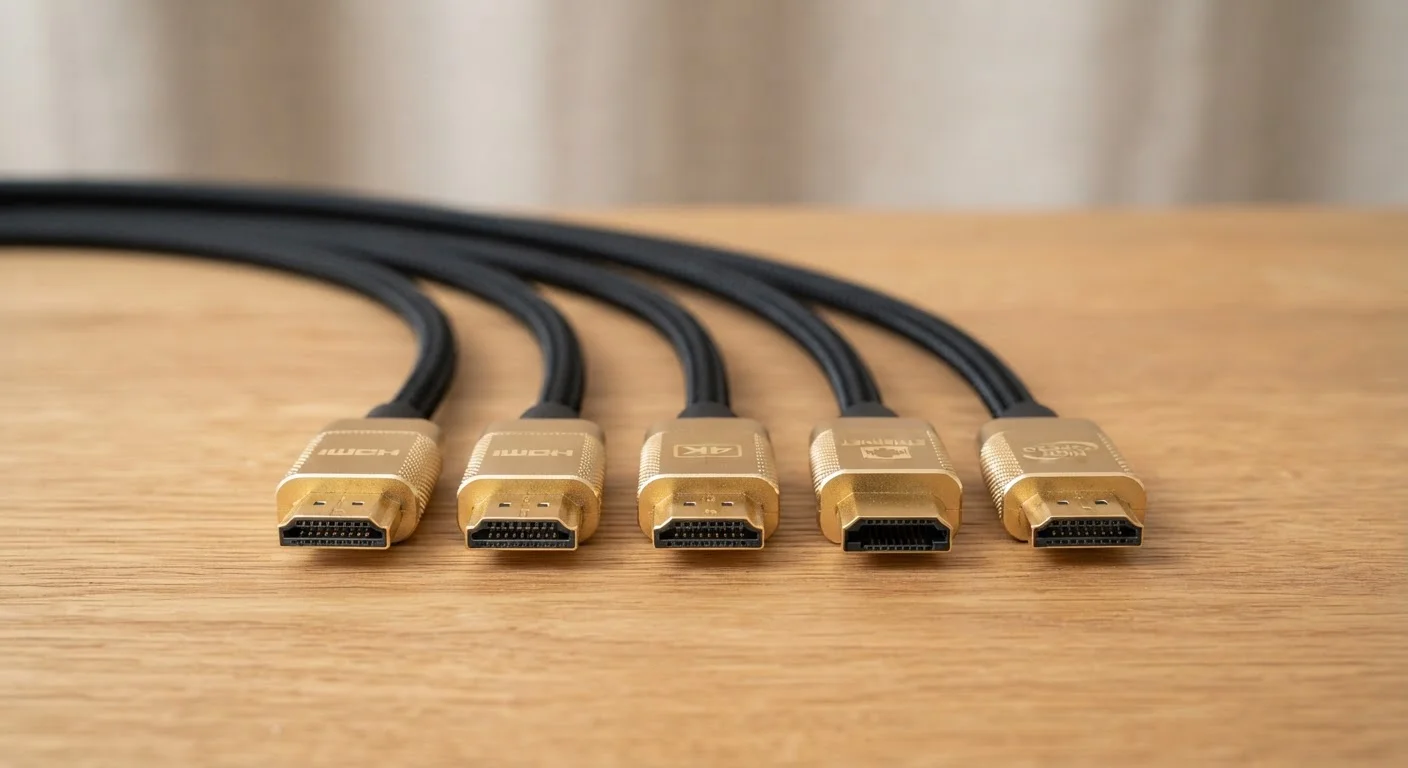
Gold-plated connectors improve picture and sound quality.
Fact
Gold plating resists corrosion, which is useful in humid environments, but it has no measurable effect on the digital signal passing through the cable.
Gold is used on connectors because it oxidizes more slowly than copper or nickel, helping maintain a clean physical contact point over time. In a typical living room, connector oxidation is rarely a practical problem. The digital signal itself is not enhanced by the connector material - it is either transmitted correctly or it isn't.
Myth
Any HDMI cable will work for 4K HDR content.
Fact
4K HDR requires sufficient bandwidth. Only cables rated Premium High Speed (18 Gbps) or Ultra High Speed (48 Gbps) are certified to reliably carry that data.
Older Standard High Speed cables max out at 10.2 Gbps, which is insufficient for 4K at 60Hz with HDR color data. Using an under-spec cable with a 4K HDR source can result in the display dropping to a lower resolution or HDR being disabled automatically. Always check the cable's speed rating, not just the connector type.
Myth
HDMI cables from the same manufacturer as your TV perform better.
Fact
HDMI is a standardized interface. A certified cable from any manufacturer performs identically to a certified cable of the same speed rating from any other manufacturer.
The HDMI specification is defined by the HDMI Licensing Administrator, and cables are tested against that standard - not against individual brands. Manufacturer-branded cables are often significantly more expensive without offering any technical advantage. What matters is that the cable carries the appropriate certification label for your use case.
Myth
HDMI cables need to be replaced regularly as technology improves.
Fact
If your cable is certified for the speed your devices require, it will continue to work correctly regardless of age - cables do not degrade with normal indoor use.
Unlike consumable electronics, a well-made HDMI cable used indoors has no components that wear out during normal operation. The only reason to replace a cable is physical damage, or because you've upgraded to a device requiring a higher bandwidth rating (for example, moving from 4K 60Hz to 4K 120Hz gaming, which requires an Ultra High Speed cable). There is no benefit to periodically replacing a functioning cable.
What Actually Matters When Choosing a Cable
The one specification worth checking is the HDMI version and speed rating, because these determine maximum bandwidth - and bandwidth is what limits whether a cable can carry 4K at 60Hz, HDR, or 8K signals. The HDMI Forum certifies cables under specific labels:
- Standard High Speed - adequate for 1080p content.
- Premium High Speed - supports 4K HDR up to 18 Gbps; look for a holographic QR label indicating certification.
- Ultra High Speed - required for 4K at 120Hz or 8K content, supporting up to 48 Gbps; this is the HDMI 2.1 cable category.
If your TV and source device support 4K, a certified Premium High Speed cable is all you need. TV resolution explained in plain English can help you confirm what your screen actually supports before you shop.
48 Gbps
Maximum bandwidth of Ultra High Speed (HDMI 2.1) cables
According to the HDMI Licensing Administrator, Ultra High Speed cables support resolutions up to 10K and refresh rates up to 120Hz at 4K.
~25 ft
Practical maximum length for passive HDMI cables
Industry guidance generally suggests passive HDMI cables perform reliably up to around 25 feet; longer runs may require active cable solutions with built-in signal amplification.
Cable length does matter slightly - very long runs (over 25 feet) can introduce signal issues regardless of price. For longer distances, look for cables marketed as "active" HDMI, which include a small built-in signal booster. Audio performance follows the same digital logic: the cable either passes lossless audio formats like Dolby Atmos correctly or it doesn't. For more on how audio formats behave over HDMI, our home theater audio guide covers the essentials.
Watch Out for Uncertified Cable Claims
Some cables are labeled 'HDMI 2.1' or '8K ready' without carrying official HDMI Forum certification. Uncertified cables may not reliably meet the bandwidth they advertise. When buying a Premium High Speed or Ultra High Speed cable, look for the HDMI Forum's holographic certification label on the packaging, or verify the cable on the HDMI Forum's official cable certification database.
The content on this site is for informational purposes only and is not a substitute for professional advice. Always consult a qualified professional for guidance specific to your situation.