

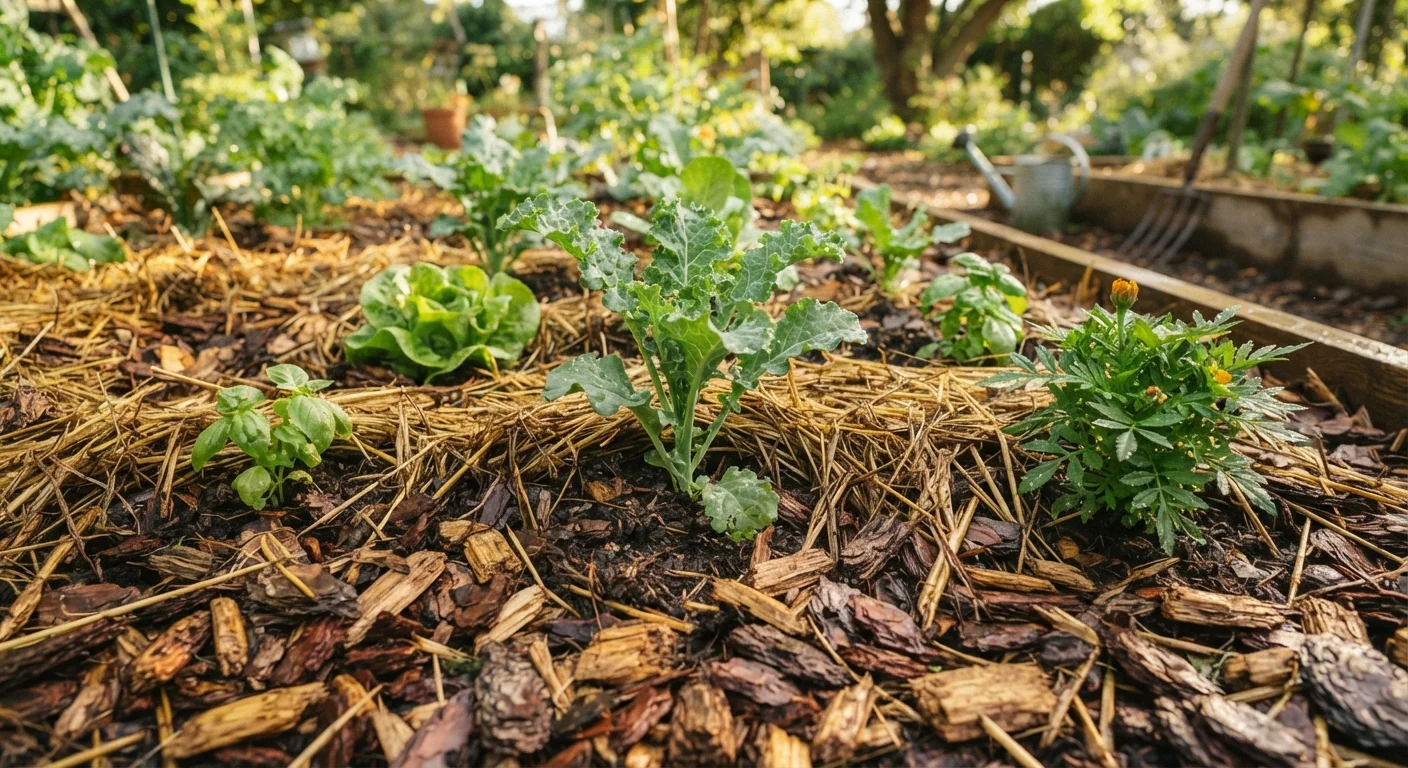
What Mulch Actually Does
Mulch is any material spread over the soil surface to protect and improve it. The benefits are interconnected: mulch holds moisture in the soil (reducing how often you need to water), moderates soil temperature extremes, slows weed germination, and - in the case of organic types - gradually breaks down to enrich the soil below. Understanding these functions helps you choose the right material for each situation.
| Primary benefit | Moisture retention, weed suppression, soil temperature regulation |
| Recommended depth (organic) | 2-4 inches |
| Gap from plant stems | At least 2-3 inches |
| Best for vegetable beds | Straw, finished compost, shredded leaves |
| Best for trees and shrubs | Wood chips, shredded bark |
| Refresh frequency (organic) | Annually, or as needed when depth drops below 2 inches |
Mulch is a practical tool for nearly every garden situation, from raised beds and in-ground plots to established perennial borders and vegetable rows. The main decision is whether to use an organic type (which decomposes over time) or an inorganic type (which does not).
Organic Mulch Types at a Glance
Organic mulches break down slowly, feeding soil microbes and improving texture and fertility over time. Each type has a distinct profile.
Organic mulch
Any mulch material derived from once-living matter - such as wood, straw, leaves, or compost - that breaks down over time and adds organic matter to the soil.
Inorganic mulch
Mulch made from non-living, non-decomposing materials such as gravel, stone, or rubber. These last longer but do not improve soil fertility.
Mulch depth
The thickness of the mulch layer applied to soil. Most organic mulches are most effective at 2-4 inches; too little allows weeds through, too much can impede water and air movement.
Mulch volcano
A problematic practice of piling mulch directly against a tree trunk or plant stem, creating a mound shape. This traps moisture and can cause rot or pest problems at the base of the plant.
Landscape fabric
A woven or non-woven synthetic sheeting placed over soil beneath mulch to suppress weeds. Its effectiveness decreases over time as organic matter accumulates on top and weeds root into the fabric.
Topdressing
The practice of adding a layer of material - such as compost or fine mulch - over existing soil or mulch to refresh nutrients and soil structure without fully digging in.
Wood Chips and Shredded Bark
Among the most widely available organic options, wood chips and shredded bark are long-lasting (often 2-4 years before significant decomposition) and work well around trees, shrubs, and perennial beds. Apply in a layer 2-4 inches deep, keeping mulch a few inches away from plant stems and tree trunks to prevent rot and discourage pests.
Straw
Straw (not hay, which carries weed seeds) is lightweight, affordable, and an excellent insulator. It's especially popular in vegetable gardens and around strawberry plants. It breaks down within a single growing season, so plan to top it up annually. It also provides habitat for beneficial ground beetles.
Compost
Finished compost used as a mulch layer delivers nutrients directly to plant roots as it breaks down. It pairs well with a thicker layer of wood chips on top to prevent it from drying out too quickly. If you're building your own supply, see our guide to composting at home.
Shredded Leaves
Fallen leaves, run through a mower or shredder, make a free and effective mulch. Whole leaves can mat together and repel water, so shredding first is important. They decompose quickly, building organic matter in the soil, and are particularly useful in woodland or shade garden settings.
Grass Clippings
Fresh clippings from an untreated lawn can be spread thinly (no more than 1-2 inches) as a mulch. Thicker layers mat down and can become anaerobic and smelly. Allow clippings to dry slightly before applying, and avoid using clippings from lawns recently treated with herbicides.
Inorganic Mulch Types and When to Use Them
Inorganic mulches do not decompose, so they require little replenishment - but they also do not improve soil fertility. They suit specific situations where durability or heat retention is the priority.
Inorganic Mulch and Soil Health
Unlike organic mulches, inorganic options like gravel and rubber do not contribute to soil fertility over time. If you use them in planting areas, plan to supplement with compost worked into the soil at planting time, or use a thin compost topdressing around plants each season. Soil health still depends on organic matter input, regardless of what sits on top.
Gravel and Stone
Gravel works well around drought-tolerant and Mediterranean-style plantings, in rock gardens, or as a path surface. It retains and radiates heat, which suits heat-loving plants but can stress plants that prefer cool roots. It does not need annual replacement but can be difficult to remove once established.
Landscape Fabric
Woven or non-woven landscape fabric is placed beneath other mulch to suppress weeds. Quality varies widely. Over time, weeds can root into or through the fabric, and it can impede the beneficial breakdown of organic mulch above it. It works best in pathways or around established shrubs where soil disturbance is minimal - it is generally not recommended for annual vegetable beds.
Rubber Mulch
Made from recycled tires, rubber mulch is very long-lasting and often used in playground areas. In garden beds, it does not improve soil and can leach compounds into the ground over time; research on its long-term effects in food-growing areas is still evolving. It's generally more appropriate for decorative or utility areas than for edible gardens.
Application Depth, Timing, and Common Mistakes
Even the right mulch applied incorrectly can cause problems. Keep these practical guidelines in mind:
- Depth: Most organic mulches perform best at 2-4 inches. Too thin and weeds push through; too thick and water cannot penetrate easily, and plant roots may be starved of oxygen.
- Keep it off stems: Mulch piled against stems or tree trunks (sometimes called a "mulch volcano") traps moisture and creates conditions for rot and pest damage. Maintain a gap of at least 2-3 inches around any plant base.
- Timing: Apply mulch after the soil has warmed in spring - mulching cold, wet soil in early spring can delay warming. In autumn, mulch after the ground begins to cool to insulate roots over winter.
- Weed first: Remove existing weeds before mulching; mulch suppresses new germination but won't reliably kill established weeds already in the ground.
These principles apply whether you're managing a new vegetable garden or an established ornamental bed. For more on gardening evidence versus popular lore, see our look at common garden myths.
25-50%
Soil moisture loss reduced by mulching
University cooperative extension programs commonly cite this range for water savings when mulch is applied correctly to garden beds.
2-4 in.
Optimal organic mulch depth for most beds
This depth is widely recommended by horticultural extension services as the effective range for weed suppression and moisture retention.
10°F+
Soil temperature moderation potential
A proper mulch layer can buffer soil from both heat and cold extremes, helping maintain more stable root-zone conditions through the seasons.
The content on this site is for informational purposes only and is not a substitute for professional advice. Always consult a qualified professional for guidance specific to your situation.