

Start here
Choosing the Right Spot
Next
Planning Your Garden Layout
Then
Preparing Your Soil
When you're ready
Planting and Watering Basics
Keep it going
Ongoing Care and Harvesting
Choosing the Right Spot
Before you buy a single seed packet, walk your yard at different times of day and observe where sunlight falls. Most vegetables - including tomatoes, beans, squash, and peppers - need a minimum of six hours of direct sunlight daily, and eight hours produces noticeably better yields. Even one extra hour of shade from a fence or tree can significantly reduce productivity.
Beyond sun, look for a spot with reasonable access to water and good natural drainage. Flat or gently sloping ground is ideal; low-lying areas that collect water after rain can waterlog roots. Keep the garden close enough to a spigot that running a hose won't feel like a chore - convenience is a real factor in how consistently you'll keep up with watering.
If you're new to managing a yard overall, the first-time homeowner's maintenance guide covers how to think about outdoor upkeep as part of your overall property care routine.
Frost date
The average calendar date when temperatures in your area are expected to drop to 32°F (0°C). Knowing your last spring frost date helps you decide when it's safe to plant tender vegetables outdoors.
Hardiness zone
A map-based system published by the USDA that divides the US into regions based on average minimum winter temperatures, helping gardeners choose plants suited to their local climate.
Soil amendment
Any material - such as compost, aged manure, or perlite - mixed into existing soil to improve its structure, drainage, fertility, or water retention before planting.
Direct sow
Planting seeds directly into garden soil outdoors, rather than starting them indoors in trays and transplanting later. Crops like carrots and beans are typically direct-sown.
Transplant
A young seedling that was started indoors or in a nursery and is moved into the garden. Tomatoes, peppers, and many herbs are commonly sold as transplants.
Mulch
A layer of material - such as straw, wood chips, or shredded leaves - spread over soil to retain moisture, regulate soil temperature, and suppress weeds.
Planning Your Garden Layout
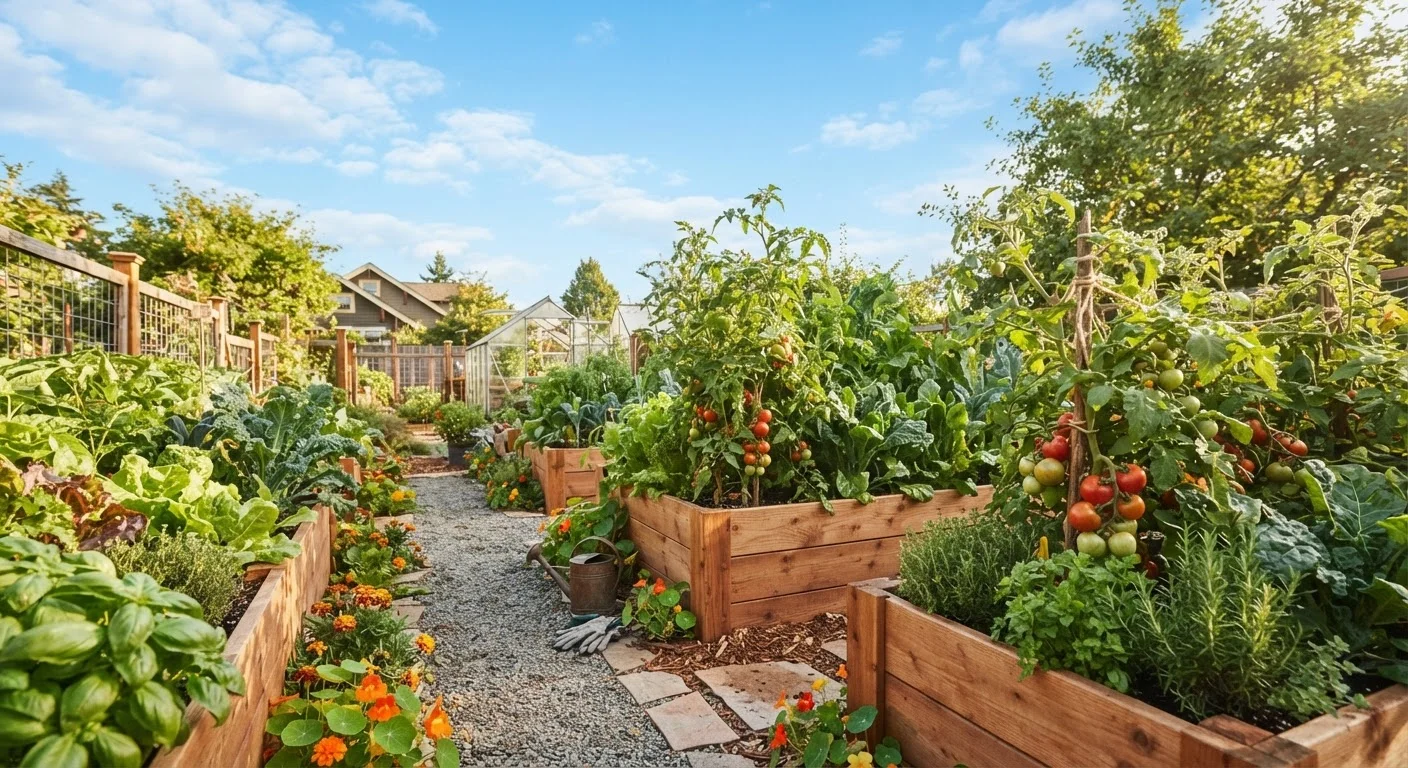
Once you have a location, decide on a size and structure. A 4×8-foot bed is a practical starting point - manageable to maintain without feeling underwhelming. You should be able to reach the center of the bed from either side without stepping on the soil, which prevents compaction.
Start smaller than you think
First-time gardeners often plant too much too soon, then struggle to keep up with watering, weeding, and harvesting. A single 4×8-foot raised bed or two 4×4 plots is enough to learn the basics and still produce a satisfying harvest. You can always expand next season once you know what works in your yard.
Decide early whether you'll garden in raised beds or directly in the ground. Each approach has distinct trade-offs in terms of cost, soil control, and drainage. The article comparing raised beds and in-ground gardens can help you choose based on your specific yard and goals.
Choose crops you'll actually eat, and group them by their needs. Tall plants like corn or pole beans should go on the north side so they don't shade shorter neighbors. Check your seed packets for spacing requirements - crowding plants reduces airflow and invites disease.
If your outdoor space is limited, don't rule out container gardening. Our guide on small-space gardening ideas shows how patios and balconies can still be productive.
Preparing Your Soil
Healthy soil is the single biggest determinant of garden success. Before planting, dig down six to eight inches and assess the texture: good garden soil feels loose, crumbles easily, and has a dark, earthy color. Dense, sticky clay or dry, sandy soil both benefit from organic matter before planting.
Don't skip a soil test
Planting into untested soil is one of the most common beginner mistakes. Many local cooperative extension offices offer low-cost soil testing that reveals pH and nutrient levels. Without this baseline, you may add amendments your soil doesn't need - or miss deficiencies that will limit your harvest all season long.
Work 2-3 inches of compost into your bed before planting. Compost improves drainage in clay soils, increases water retention in sandy soils, and feeds the microorganisms that make nutrients available to plant roots. If you want to produce your own, our guide to composting at home walks through building a simple system from kitchen scraps.
After planting, apply a layer of mulch around your plants - typically two to three inches deep - to hold moisture, moderate soil temperature, and reduce weeds. The garden mulch field guide covers the most common types and which situations each suits best.
Planting and Watering Basics
Timing your planting around your local frost dates is essential. Cool-season crops - lettuce, spinach, broccoli, peas - can tolerate light frost and go in early. Warm-season crops - tomatoes, peppers, cucumbers, squash - must wait until nighttime temperatures stay consistently above 50°F. Your seed packets will state whether to direct sow or transplant, and your local cooperative extension office can provide a planting calendar specific to your county.
When planting, follow the depth and spacing directions on the seed packet. Most beginners plant too shallow or too close together. Water gently after planting to settle the soil without washing seeds away.
Most vegetables need about one inch of water per week, delivered slowly and deeply. Shallow, frequent watering encourages shallow roots, making plants less drought-tolerant. Water at soil level rather than overhead when possible - wet foliage promotes fungal disease. For larger gardens, a drip system or soaker hose can make this much easier to manage consistently.
Watering systems can simplify your routine
Hand-watering works fine for small gardens, but as your plot grows, a simple drip system or soaker hose can save time and deliver water more consistently. Our article comparing drip irrigation and sprinkler systems explains the options clearly so you can decide what fits your setup.
Ongoing Care and Harvesting
Weeding regularly - ideally while weeds are still small - prevents them from competing with your vegetables for water and nutrients. A quick ten-minute pass two or three times a week is far more effective than a single overwhelming session each month.
Watch your plants for early signs of trouble: yellowing leaves can indicate a nutrient deficiency or overwatering; holes in foliage often point to insect damage. Catching problems early gives you more options and less damage to manage. Healthy, well-fed plants in good soil are naturally more resistant to pests and disease.
Harvest vegetables as soon as they reach maturity - don't leave them on the plant past their peak. Zucchini left too long becomes woody and signals the plant to stop producing. Lettuce picked regularly keeps regrowing. The general rule: the more you harvest, the more the plant produces.
When the season ends, plan ahead. Pulling spent plants, adding compost, and covering bare soil before winter preserves your soil structure and reduces pest populations next year. Our fall garden cleanup checklist covers exactly what to tackle before the first frost arrives.
Frequently Asked Questions
Timing depends on your local climate and the vegetables you want to grow. Cool-season crops like lettuce and spinach can go in weeks before the last frost, while warm-season crops like tomatoes and peppers need to wait until after it. Check your USDA Plant Hardiness Zone and seed packet dates for guidance specific to your area.
You can start with as little as a 4×4 or 4×8-foot plot and grow a meaningful variety of vegetables. Compact layouts like raised beds make efficient use of space. If your yard is very limited, container gardening on a patio or balcony is also a practical option.
Lettuce, radishes, green beans, zucchini, and cherry tomatoes are commonly recommended as beginner-friendly choices because they grow quickly and are relatively forgiving. Starting with crops you actually enjoy eating keeps the project rewarding from the start.
Most vegetables benefit from about one inch of water per week, delivered slowly and deeply rather than in frequent shallow sprinkles. Watering at soil level in the morning reduces disease risk. Adjust based on rainfall, temperature, and your specific soil drainage.
Both approaches work well, and each has trade-offs. Raised beds offer better drainage and easier soil control, while in-ground gardens are less expensive to set up. Our guide <a href="/home/garden-outdoors/raised-beds-vs-in-ground-gardens-which-suits-your-yard">comparing raised beds and in-ground gardens</a> covers the differences in detail.
Remove spent plants, add compost to replenish nutrients, and protect bare soil with mulch or a cover crop over winter. A thorough fall cleanup reduces pest and disease pressure the following year.
The content on this site is for informational purposes only and is not a substitute for professional advice. Always consult a qualified professional for guidance specific to your situation.