

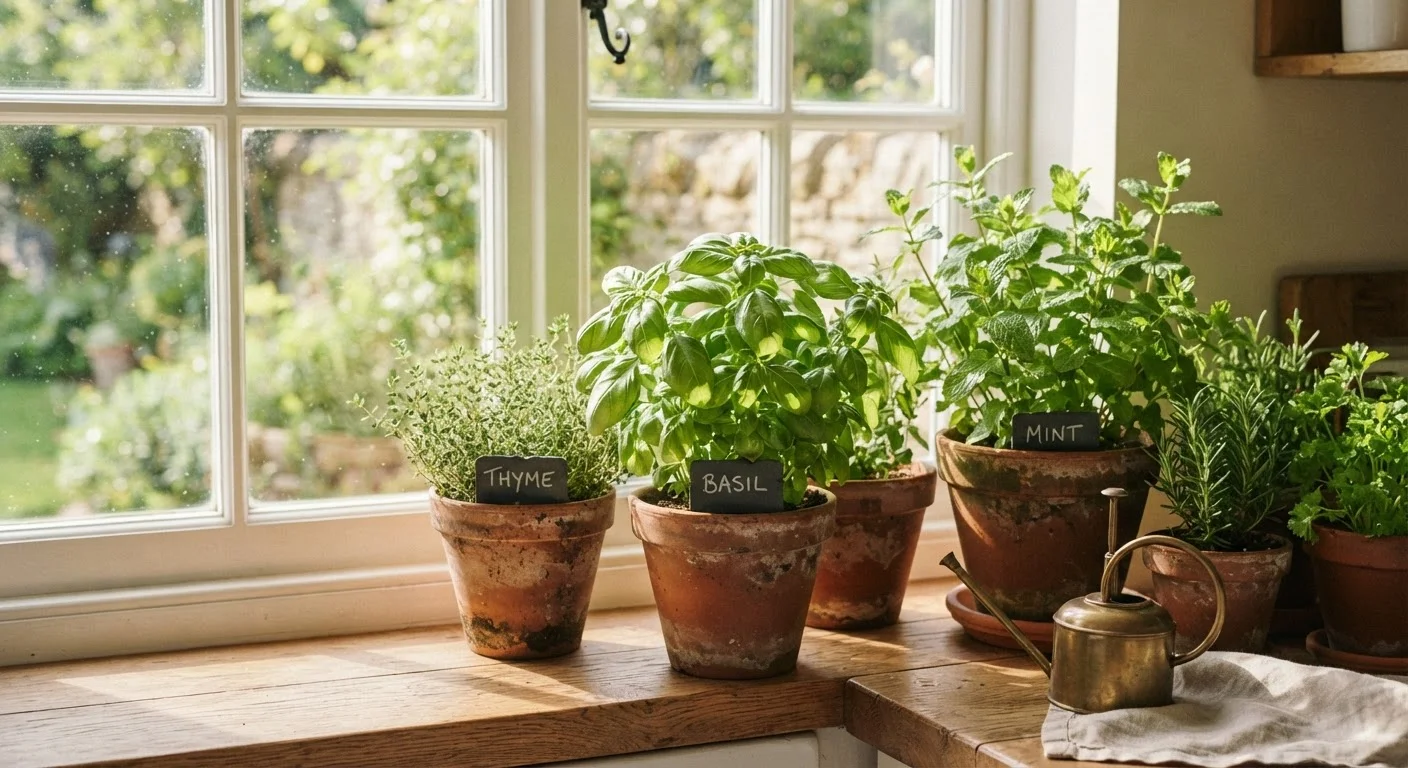
Our Verdict
Indoor herb gardening genuinely works - but only when you're honest about the conditions you're offering. Matching the right herbs to your available light and choosing containers with proper drainage will determine whether your herbs thrive or slowly decline. Go in with realistic expectations, and the hobby is both rewarding and practical.
Best for apartment dwellers, small-space gardeners, and cooks who want convenient fresh herbs and are willing to supplement natural light or select low-light-tolerant varieties.
Why Indoor Herb Gardens Are Worth Trying
Growing herbs indoors puts fresh flavour within arm's reach and connects you to the satisfying rhythm of tending something living. Unlike an outdoor garden, an indoor setup requires minimal space, no digging, and no exposure to deer or hard frost. You can snip what you need directly into a pot on your counter, reducing food waste and the need to buy bundled herbs that wilt within days of purchase.
Indoor herb gardening is also one of the most accessible entry points into growing food at home. The investment is low, the learning curve is manageable, and most common culinary herbs - basil, thyme, oregano, chives - are forgiving enough for beginners to see early success. For renters or urban dwellers without outdoor space, it can be the only realistic form of food gardening available. See our small-space gardening guide for broader strategies when square footage is tight.
Fresh herbs available year-round
Indoor growing isn't tied to outdoor growing seasons, so you can harvest chives or parsley in January just as easily as in July.
Requires minimal space
A single sunny windowsill or a small countertop shelf is enough to grow several useful herb varieties without dedicated garden space.
Low startup cost compared to outdoor gardening
Seeds, a few pots, and a bag of potting mix represent a modest investment relative to building raised beds or amending outdoor soil.
Reduces food waste from store-bought bunches
Harvesting only what you need means less waste than buying a full bunch of herbs that may wilt before you finish using them.
Accessible to renters and apartment dwellers
No outdoor access or landlord permission is needed, making this one of the most practical food-growing options for urban and rental households.
The Real Challenges You Should Expect
The biggest misconception about indoor herbs is that a bright-looking kitchen automatically equals a suitable growing environment. In reality, most windows - even south-facing ones - deliver significantly less light than the same spot would receive outdoors. Basil, for instance, wants 8 or more hours of direct sun per day; a windowsill in winter rarely provides that.
Humidity, airflow, and temperature fluctuations near heating vents or air conditioners compound the problem. Herbs sitting in poorly draining containers are also prone to root rot, especially when well-meaning gardeners water on a fixed schedule rather than checking soil moisture first. These aren't reasons to give up - they're variables you can manage once you understand them. Our gardening myths article covers some common misconceptions that trip up new growers.
Most kitchens don't provide enough natural light
Even a bright-seeming window often delivers far less light than herbs need, leading to leggy, weak growth - especially during winter months.
Overwatering is easy and often fatal
Without outdoor conditions to help soil dry between waterings, many indoor herbs succumb to root rot caused by inconsistent or excessive watering.
Limited harvest volume per plant
A single indoor pot won't supply more than occasional small harvests; heavy or frequent use quickly outpaces what indoor plants can regenerate.
Pests can establish indoors without natural predators
Fungus gnats and spider mites are common indoor herb problems, and without outdoor predators to control them, infestations can spread between pots.
Grow lights add cost and require consistent use
A quality grow light is an additional purchase, and it only compensates for poor natural light when used on a reliable daily schedule.
Light: The Make-or-Break Factor
Light is the variable most indoor herb growers underestimate. A south-facing window is generally the strongest option in the Northern Hemisphere; east- and west-facing windows offer moderate light; north-facing windows rarely provide enough for most culinary herbs.
If natural light is genuinely limited, a dedicated grow light used for 12-14 hours per day can fill the gap. Full-spectrum LED grow lights are widely available and energy-efficient. The key is consistency - irregular use won't compensate for poor natural light. Position lights close enough to be effective (follow the manufacturer's guidance for distance) and put them on a timer to maintain a reliable schedule.
Best Herbs for Lower-Light Conditions
If your space gets limited direct sunlight, focus on shade-tolerant herbs: chives, mint, parsley, and cilantro cope better than basil, rosemary, or thyme. Mint in particular can spread aggressively, so always grow it in its own container to prevent it from crowding out neighbouring plants. Matching herb choice to available light is the single most effective step toward indoor growing success.
For herbs that tolerate lower light - chives, mint, and parsley chief among them - a moderately bright window may be enough. Herbs like basil and rosemary are high-light plants and are more likely to struggle without supplemental lighting in most US homes during winter months.
Containers, Soil, and Watering Basics
Container choice directly affects plant health. Any pot you use must have drainage holes - without them, water accumulates at the root zone and causes rot. Terracotta pots dry out faster than plastic or glazed ceramic, which can work in your favour if you tend to overwater. Aim for containers that are appropriately sized: a 4-6 inch pot suits a single herb plant, while a wider window box can hold a small grouping.
Use a well-draining potting mix rather than garden soil, which compacts in containers and restricts airflow to roots. Check soil moisture before watering by pressing a finger about an inch into the soil - if it feels dry at that depth, water thoroughly until it drains from the bottom. If it still feels moist, wait. This simple check prevents the overwatering that kills more indoor herbs than any other cause. You can find additional container and soil guidance in our raised beds vs. in-ground gardening overview, which covers soil principles that apply to containers too.
6-8 hrs
Daily direct light most culinary herbs require
University extension resources consistently cite 6-8 hours of direct sun as the baseline for productive herb growth indoors or out.
~1 inch
Soil depth to check before watering
Checking moisture at one inch below the soil surface is a widely recommended method to avoid both overwatering and underwatering container plants.
Setting Realistic Harvesting Expectations
A single pot of basil from a grocery store is not designed to last indefinitely - it's typically multiple seedlings crammed together for visual appeal, not long-term productivity. Separating them into individual containers and cutting back to a proper growing schedule extends their life considerably. Regular harvesting (pinching stems just above a leaf node) encourages bushier growth rather than the tall, spindly shape that signals stress.
Don't expect your indoor herb garden to supply every meal. Think of it as a supplement: fresh leaves for finishing a dish, garnishing, or making the occasional batch of herbed butter. If you're interested in growing more food at home on a larger scale, our guide to starting a vegetable garden walks through planning a full outdoor setup. Indoor herbs work best as a complement to, not a replacement for, a broader growing strategy.
The content on this site is for informational purposes only and is not a substitute for professional advice. Always consult a qualified professional for guidance specific to your situation.