

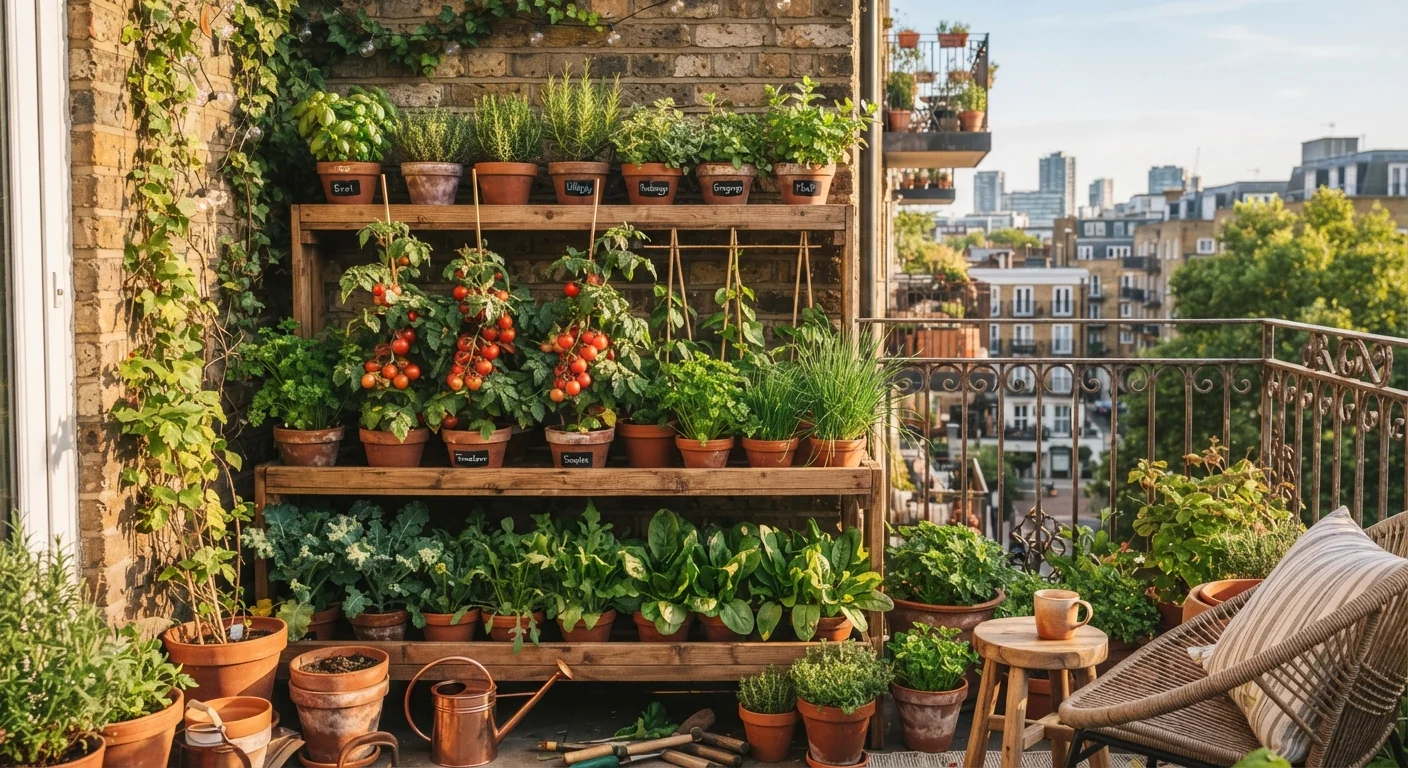
Why Small Spaces Are More Capable Than They Look
A narrow patio, a six-foot balcony, or a side yard that never quite gets used - these spaces have more growing potential than most homeowners realize. The difference between a productive small garden and a frustrating one usually comes down to strategy, not square footage.
Small-space gardening does require a shift in thinking. You're not simply doing less of what a large yard does - you're working more intentionally with what you have. That means choosing plants carefully, managing soil quality in containers, and using vertical space that often goes completely ignored.
If you're starting from the very beginning, our guide to starting a vegetable garden from scratch walks through site selection and planning before you spend a dollar on supplies. For experienced gardeners moving to a smaller space, the strategies below will help you maintain or even increase your yield.
Go vertical with trellises and wall planters
The most underused dimension in any small garden is height. A simple trellis fastened to a fence or wall can support climbing beans, cucumbers, peas, or even small squash varieties, turning a one-square-foot footprint into several feet of productive growing surface.
Wall-mounted planter pockets work well for herbs and shallow-rooted greens like lettuce and spinach. Before mounting anything heavy, check that your fence or wall can handle the weight - soil and water add up quickly. Freestanding A-frame trellises are a flexible alternative that can be repositioned as seasons change.
A trellis turns one square foot of ground into several vertical feet of productive growing surface.
Choose compact and dwarf plant varieties
Standard tomato plants can reach six feet tall and spread just as wide - clearly impractical for a patio. Breeders have developed compact, determinate, and dwarf varieties of almost every popular vegetable specifically for container and small-space growing. These plants are engineered to produce a full harvest in a fraction of the space.
Look for variety names that include descriptors like "patio," "bush," "compact," or "dwarf" when reading seed packets or plant tags. Pepper varieties bred for containers, bush cucumber types, and miniature eggplants all perform well in tighter conditions without sacrificing too much yield.
Compact and dwarf varieties are engineered to produce a full harvest in a fraction of the usual space.
Master container depth and drainage
Not all containers are equal. A shallow decorative pot might look great but starve root vegetables and fruiting plants of the depth they need. As a general guide, leafy greens and herbs do fine in 6-8 inches of depth, while tomatoes, peppers, and beans typically need at least 12 inches, and root crops like carrots or beets need 12-18 inches.
Drainage holes are non-negotiable. Waterlogged roots are one of the most common causes of container plant failure. If a pot you love lacks drainage holes, use it as an outer decorative sleeve for a plain nursery pot that does have them. Elevating containers slightly on pot feet or bricks also helps excess water escape freely.
For a deeper look at how raised beds compare to in-ground options in small yards, see our breakdown of raised beds vs. in-ground gardens.
Drainage holes are non-negotiable - waterlogged roots are one of the most common container plant killers.
Practice succession planting to extend harvests
In a small space, having six lettuce plants all mature at once creates a glut followed by a long gap. Succession planting - sowing a small number of seeds every two to three weeks rather than all at once - keeps a steady supply coming without requiring more containers or ground space.
This approach works especially well with fast-growing crops: radishes, salad greens, cilantro, bush beans, and beets. By the time your first sowing is finished producing, the next round is just coming in. It also extends your season by letting you fill gaps left by crops that have run their course.
Sowing small batches every few weeks keeps a steady supply coming without needing more containers.
Prioritize sun mapping before you plant anything
Placing the right plant in the wrong light is the fastest way to waste a season in a small garden. Before buying a single seedling, spend a day tracking how sunlight moves across your space - note which areas get direct sun in the morning, which get afternoon sun, and which are in shade for most of the day.
Most fruiting vegetables (tomatoes, peppers, cucumbers) need six or more hours of direct sun. Leafy greens and herbs are generally more tolerant of partial shade and can actually benefit from afternoon shade in hot climates. Matching plants to your actual conditions, rather than ideal ones, sets you up for success from the start.
Tracking sunlight for one full day before planting prevents the most common and costly small-garden mistake.
Use self-watering containers to manage moisture consistently
Containers dry out faster than in-ground beds, and small containers can go from moist to bone-dry in a single hot afternoon. Self-watering containers have a built-in reservoir at the base that wicks moisture upward into the root zone as the plant needs it, reducing both the frequency of watering and the risk of stress from uneven moisture.
They're particularly useful for busy households or for gardeners who travel. If you prefer traditional pots, grouping containers together helps retain humidity around the plants and reduces how quickly each one dries out. A layer of mulch on top of container soil - shredded leaves or wood chips work well - further slows evaporation.
Self-watering containers reduce stress on plants and on gardeners who can't water every single day.
Making It All Come Together
The gardeners who get the most from small spaces treat every decision as interconnected. The containers you choose affect drainage; drainage affects root health; root health determines what you can grow. Layering in practices like companion planting squeezes more productivity from each container or bed without requiring more room.
Watch for Container Soil Fatigue
Container soil compacts and loses nutrients more quickly than in-ground soil, often within a single growing season. At the start of each season, refresh containers by removing the top few inches of old mix and replacing it with fresh compost or quality potting mix. This simple reset makes a noticeable difference in plant performance without requiring you to start completely from scratch.
Good soil is the one input small-space gardens cannot do without. Because container and raised-bed soil doesn't replenish itself the way in-ground soil can, feeding it matters. Home composting gives you a steady, low-cost source of organic matter you can work into containers each season. Even a small worm bin on a porch can make a noticeable difference in plant vigor over time.
Whatever your space looks like right now, start with one or two of these strategies rather than trying to implement everything at once. Small-space gardening rewards patience and observation - and once you understand how your particular corner of the world behaves, the possibilities expand considerably.
The content on this site is for informational purposes only and is not a substitute for professional advice. Always consult a qualified professional for guidance specific to your situation.