

What Makes a Plant 'Native' in the First Place
The word "native" gets used loosely in garden conversations, but it has a fairly specific meaning. A plant is native to a region if it established itself there through natural processes - not through human transportation or cultivation. In the United States, ecologists and botanists generally use the period before widespread European settlement as the baseline.
This matters because native status is always tied to place. Black-eyed Susans (Rudbeckia hirta) are native across much of the eastern and central US. Saguaro cactus is native to the Sonoran Desert. Neither is "native" across the whole country. When choosing plants, your specific region - even your county - shapes which species truly belong.
Non-native plants aren't automatically harmful. Many common garden plants simply don't interact much with the local ecosystem. A smaller number, called invasive species, actively outcompete native plants and disrupt local habitats. Understanding that distinction helps gardeners make more informed choices.
Why Gardeners Are Making the Shift
Interest in native plants has grown steadily, and for practical reasons alongside ecological ones. Gardeners who have spent seasons nursing drought-sensitive ornamentals through hot summers or battling recurring pest problems often find natives a refreshing change of pace.
70%
Of US land is privately owned
According to the US Forest Service, private land - including residential gardens - represents a significant share of potential habitat that homeowners can actively shape.
~29 billion
Birds lost in North America since 1970
A 2019 study published in the journal Science estimated a net loss of nearly 3 billion birds in North America since 1970, with habitat loss cited as a primary driver.
Up to 96%
Of land birds raise young on insects
Research by entomologist Douglas Tallamy suggests that up to 96% of terrestrial bird species rely on insects - many of which depend on native plants - to feed their young.
Once established, native plants are generally adapted to local rainfall patterns, meaning they can often get by without supplemental irrigation during normal weather. Their root systems - often deeper and more extensive than those of non-native ornamentals - help them access moisture and anchor soil against erosion.
Native plants also tend to have natural resistance to the insects and diseases common in their region. This doesn't eliminate all pest pressure, but it often reduces the need for chemical interventions. That appeals to gardeners who want lower-maintenance outdoor spaces and to those concerned about pesticide effects on pollinators.
For wildlife gardeners, the draw is even clearer. Research from entomologist Douglas Tallamy and others has documented that native oaks, for example, support hundreds of caterpillar species - a critical food source for nesting birds. Many non-native trees and shrubs support far fewer. Understanding how plants interact with their environment can help you design a garden that actively sustains local life.
Common Misconceptions Worth Clearing Up
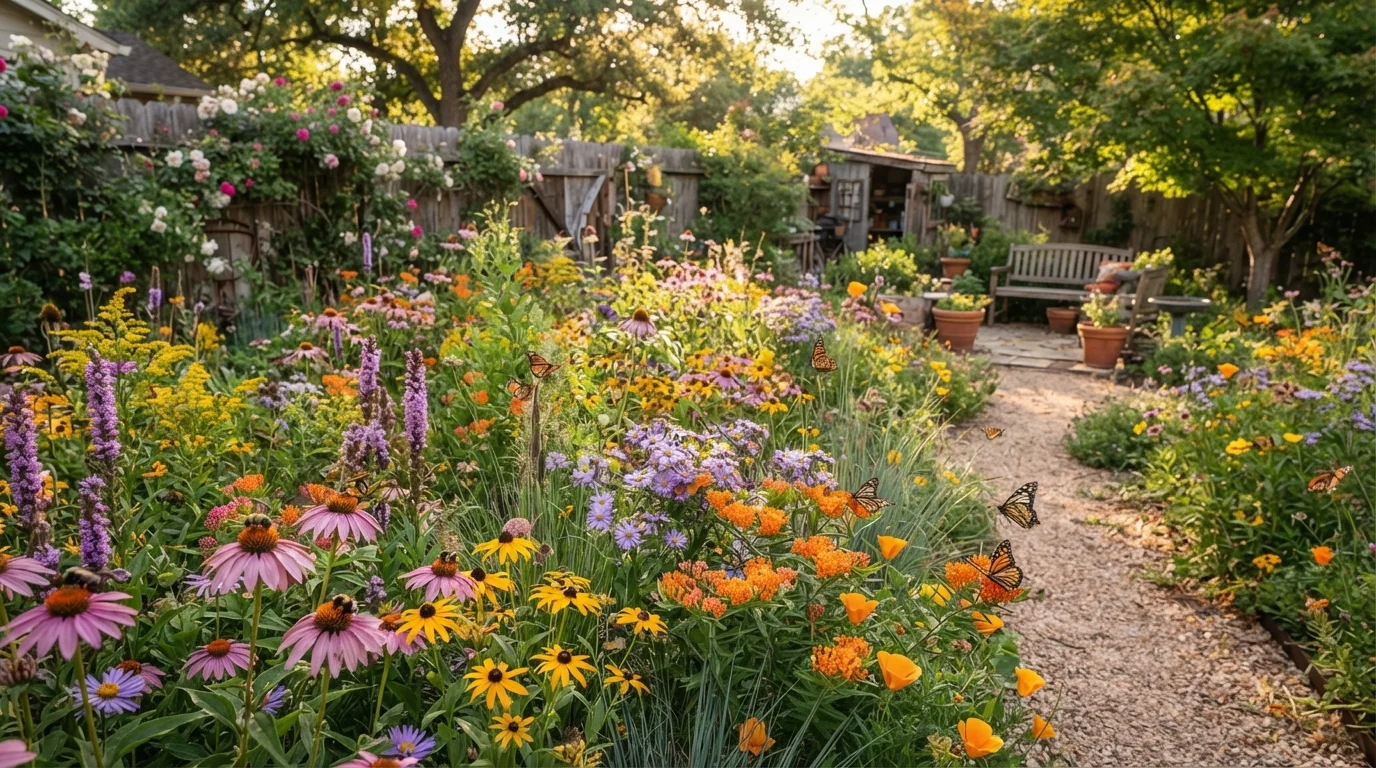
Some gardeners hesitate because they picture native plant gardens as wild and unkempt. In reality, many native species are widely used in formal landscape design - coneflowers, switchgrass, wild columbine, and serviceberry all look at home in tidy, structured beds. Aesthetics and ecological value are not in conflict.
"Native" Doesn't Mean Wild-Looking
Many native plants are routinely used in formal and contemporary landscape design. Species like coneflower, little bluestem grass, and native asters are common in designed gardens across the US. Choosing natives doesn't limit your design options - it expands the ecological value of whatever design you choose.
Another misconception is that going native means giving up color or variety. Native plant palettes vary enormously by region, and most areas have natives that bloom across spring, summer, and fall. Mixing annuals and perennials - including native species in both categories - can extend color and structure throughout the growing season.
There is also a tendency to assume that native plants are always easy. The establishment period is real: most natives need consistent moisture for their first season or two while roots develop. Planning for that transition sets gardeners up for the lower-maintenance years that follow.
Getting Started Without Overhauling Your Whole Yard
You don't need to tear out everything and start over. Most gardeners find that adding natives gradually - replacing a struggling shrub, planting a small wildflower patch, or adding a native ground cover under a tree - is both manageable and rewarding.
Start with a Small Native Patch
Rather than committing to a full garden overhaul, try converting a single bed or border to native species first. This lets you observe how the plants perform in your specific yard conditions before expanding. A small, well-chosen native planting often outperforms a large bed of poorly matched species.
A good first step is identifying what naturally grows in your county or ecoregion. Your state's cooperative extension service, local native plant societies, or the Ladybird Johnson Wildflower Center's online database (for US gardeners) are reliable starting points. Look for species listed as native to your specific state or region, not just broadly to "North America."
Think also about your yard's conditions before selecting plants. A shady, moist area calls for different natives than a sunny, dry slope. Matching plants to your actual site - rather than forcing a species to adapt - is where most of the low-maintenance benefit comes from. Your planting method also plays a role in how well natives establish, particularly in yards with compacted or poor soil.
Even a modest patch of native plants can attract pollinators, reduce the time you spend watering, and connect your outdoor space to the broader ecosystem around it. That combination of practical and ecological benefit is exactly why so many gardeners are giving natives a closer look.
Frequently Asked Questions
A plant is generally considered native if it grew in a specific region before human introduction from other areas. In the US context, this usually means before European settlement. The designation is always tied to a specific geography - a plant native to Texas is not necessarily native to Ohio.
Yes, but typically less once they are established. The first one to two growing seasons usually require regular watering to help roots develop. After that, most native plants can thrive on natural rainfall in their home region with minimal intervention.
Many native plants are well suited to smaller spaces. Low-growing natives, ornamental grasses, and compact wildflowers can fit raised beds, borders, or even large containers. Choosing species scaled to your space is key.
Some native plants do self-seed or spread via rhizomes, so it is worth researching the specific habits of any species before planting. Many natives are well-behaved in garden settings, and spreading varieties can be managed with simple edging or deadheading.
Local native plant societies, university extension programs, and botanical gardens are good starting points for identifying regionally appropriate species. Many local nurseries now carry regionally sourced native plants as demand has grown.
In most cases, yes - particularly for supporting local wildlife. Native plants have co-evolved with local insects, birds, and other animals, providing food and habitat that many non-native ornamentals do not. They also typically reduce the need for irrigation and synthetic inputs.
The content on this site is for informational purposes only and is not a substitute for professional advice. Always consult a qualified professional for guidance specific to your situation.