

Option A
Annual Plants
The high-impact, flexible choice for seasonal color.
Best for: Gardeners who want vivid, consistent blooms throughout one growing season and enjoy replanting each year.
Option B
Perennial Plants
The dependable backbone that returns year after year.
Best for: Homeowners who want low-maintenance structure and value plants that regrow from the same roots each spring.
What Makes a Plant Annual or Perennial?
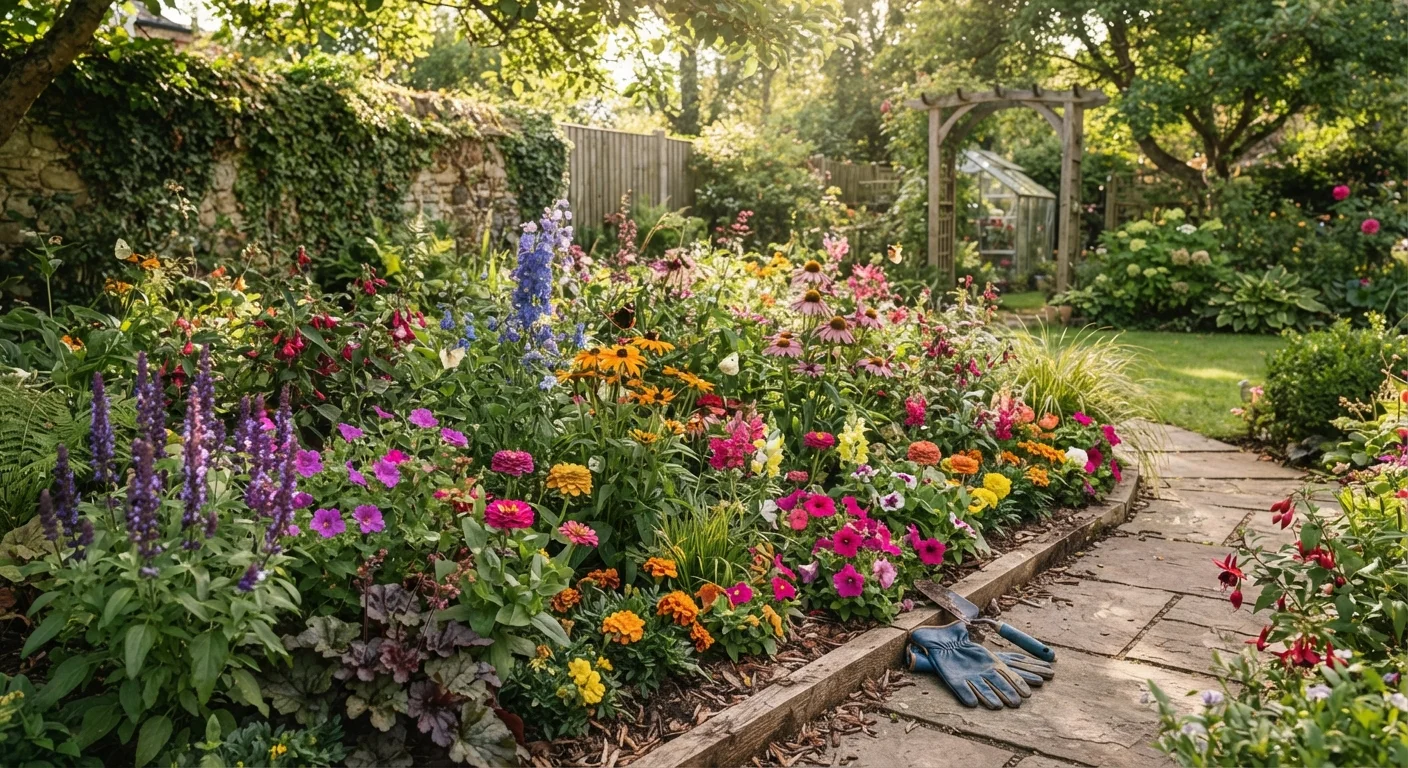
The difference comes down to life span. An annual germinates, flowers, sets seed, and dies all within one growing season. It puts tremendous energy into blooming, which is why annuals like zinnias, marigolds, and impatiens often flower non-stop from late spring through the first frost. Once cold arrives, they're done - you'll clear them out and start fresh next year.
A perennial, by contrast, sends its top growth dormant in winter but keeps its root system alive underground. Come spring, those same roots push up new growth. Coneflowers, black-eyed Susans, and hostas are classic examples. They typically bloom for a shorter window each year than annuals, but they reliably return without you replanting them.
A third category worth noting is the biennial - a plant that takes two years to complete its life cycle, like foxglove and hollyhock. They're less common in everyday garden planning but worth knowing if you notice certain plants not blooming in their first year.
What About Self-Seeding Annuals?
Some annuals - including cleome, larkspur, and certain varieties of cosmos - drop seeds that germinate the following spring, making them appear to behave like perennials. They're still technically annuals; it's new seedlings returning, not the same plant. This self-seeding habit can be a welcome bonus, but seedlings may not always emerge exactly where you'd like them.
Side-by-Side: How Annuals and Perennials Stack Up
Understanding the trade-offs at a glance helps you plan smarter. Here's how the two types compare across the factors that matter most to home gardeners:
| Criterion | Annual Plants | Perennial Plants |
|---|---|---|
| Life span | One growing season | Returns for 3+ years |
| Bloom duration | Continuous through season | Weeks to a few months per year |
| Replanting required | Every year | Rarely; division every few years |
| Upfront cost | Lower per plant | Higher per plant |
| Long-term cost | Higher (annual purchase) | Lower once established |
| Design flexibility | High - change layout yearly | Lower - plants persist in place |
| Establishment time | Fast - blooms same season | Slower - 2-3 years to peak |
| Winter hardiness | Not applicable; dies at frost | Zone-dependent; roots survive cold |
One important nuance: a plant classified as a perennial in USDA Hardiness Zones 8-10 may behave as an annual in colder northern zones. Always check your zone before assuming a plant will overwinter in your garden. The USDA Plant Hardiness Zone Map is a free, publicly available resource for this.
Building a Garden That Uses Both
The most resilient and visually appealing home gardens typically rely on perennials as the backbone and annuals as the seasonal accent. Think of perennials as the furniture in a room - they define the shape and scale - while annuals are the accessories you swap out to keep things fresh.
A practical starting framework:
- Define borders with perennials. Plant ornamental grasses, coneflowers, or salvia along the edges of a bed. These will expand gradually and reduce weeding as ground cover fills in.
- Fill gaps with annuals in year one. Perennials are slow to establish and often follow the gardener's rule of thumb: "sleep, creep, leap" - quiet their first year, modest their second, vigorous their third. Annuals fill the visual gaps while perennials settle in.
- Layer by bloom time. Choose perennials that bloom in sequence - spring bulbs give way to early-summer coneflowers, then late-summer rudbeckia - and use annuals to maintain color during any gaps.
For gardeners deciding between garden formats, our guide to raised beds vs. in-ground gardens covers how your planting structure affects plant selection. You might also explore companion planting strategies to make the most of how annuals and perennials grow alongside each other.
"Sleep, Creep, Leap"
Perennial establishment rule of thumb
This widely used horticultural guideline describes how most perennials take up to three years to reach their full growth and flowering potential.
13 zones
USDA Plant Hardiness Zone divisions
The USDA Plant Hardiness Zone Map divides the US into 13 zones based on average annual minimum temperatures, guiding plant selection and perennial overwinter expectations.
Cost, Maintenance, and Long-Term Planning
Annuals generally cost less per plant upfront but add up over time because you replace them every season. Perennials often carry a higher initial price tag - especially larger specimens - but pay off over multiple years without replanting costs.
Maintenance patterns also differ. Annuals need deadheading (removing spent blooms) regularly to keep them producing flowers. Perennials require periodic division every few years to prevent overcrowding and maintain vigor, but week-to-week care is typically lighter once established.
Watering needs vary by species rather than by annual-vs-perennial status alone. Our guide to watering your garden well walks through timing and method regardless of what you're growing. If you're drawn to plants that require even less intervention, native perennials are worth exploring - many are naturally adapted to local rainfall patterns and soil conditions.
A practical way to start: invest in a core group of three to five reliable perennials suited to your zone, then use a modest budget of annuals around them each spring. As your perennials expand over two to three years, your annual spending naturally decreases.
The content on this site is for informational purposes only and is not a substitute for professional advice. Always consult a qualified professional for guidance specific to your situation.