

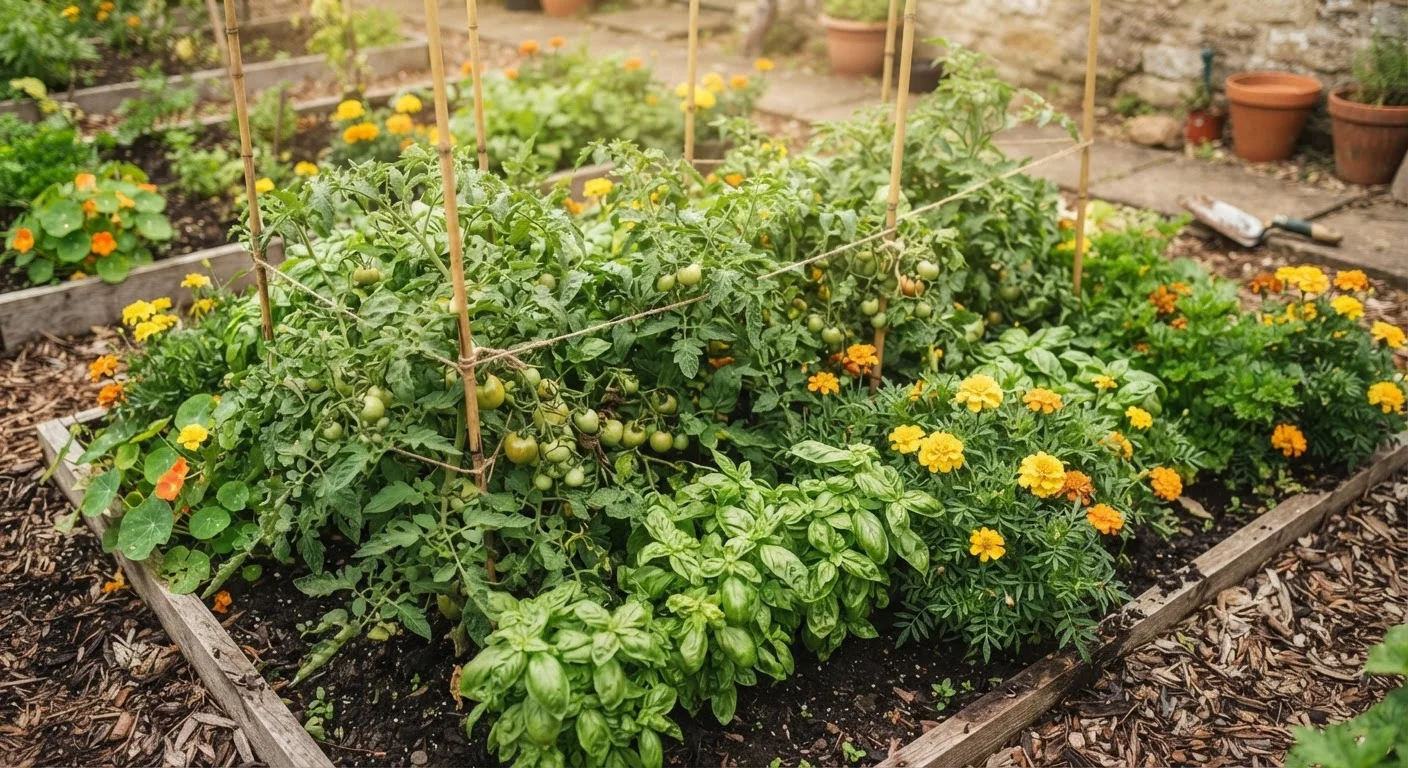
What Companion Planting Actually Means
Companion planting is the practice of growing different plant species near each other with the intention of creating mutual benefit - or at least avoiding harm. Gardeners have practiced it for centuries, drawing on observation, tradition, and more recently, scientific research.
The term covers a range of relationships: one plant may repel insects that damage another, a deep-rooted plant may draw up nutrients that benefit a shallower neighbor, or a tall plant may shade a sun-sensitive one at the right time of day. Not all of these claimed relationships are equally well supported, which is why it helps to approach companion planting with both curiosity and a degree of critical thinking.
If you're planning a mixed planting, see our guide on planning with annuals and perennials for a framework that complements this approach.
The Science Behind Plant Relationships
Plants interact through several documented mechanisms. Understanding these helps you evaluate which companion planting claims are plausible and which are garden folklore.
- Nitrogen fixation: Legumes (beans, peas, clover) host bacteria in root nodules that convert atmospheric nitrogen into a form plants can absorb. This genuinely enriches nearby soil, benefiting neighboring plants after the legume's roots break down.
- Allelopathy: Some plants release chemical compounds from their roots or decomposing leaves that inhibit the growth of surrounding plants. Black walnut trees are a well-documented example - they produce juglone, which suppresses many common vegetables.
- Pest disruption: Strong-scented plants may mask the odor of a target crop, confusing insects that locate food by smell. Research results are mixed, but certain combinations show measurable effects under field conditions.
- Attracting beneficials: Flowering plants draw pollinators and predatory insects - such as parasitic wasps and ground beetles - that prey on common garden pests. This is one of the better-supported mechanisms in companion planting.
~30%
Yield increase with Three Sisters polyculture
Agricultural research on traditional Indigenous Three Sisters systems has documented yield advantages over monoculture plots in comparable conditions.
4-6 weeks
Time for marigolds to affect soil nematodes
Studies on French marigold nematode suppression generally require dense planting maintained for at least one full growing season to show measurable soil effects.
3x
More beneficial insects in polyculture gardens
Research comparing monoculture and mixed-planting gardens consistently finds greater populations of predatory and parasitoid insects in diversified plots.
For companion planting to work well, your soil also needs to be in good shape. Our soil pH explainer covers a foundational element many gardeners overlook.
Pairings That Hold Up to Scrutiny
Not every traditional pairing has been put through rigorous trials, but several are supported by accumulated research and consistent real-world results.
The Three Sisters
Corn, beans, and squash grown together is one of the oldest and most studied companion systems. Corn provides a trellis for beans; beans fix nitrogen; squash leaves shade the soil, reducing weeds and retaining moisture. Studies of Indigenous agricultural systems show this combination can improve yield and soil health compared to monoculture plantings.
Tomatoes and Basil
This pairing is beloved but the evidence is softer than many gardeners believe. Some small studies suggest basil may deter thrips, and its flowers attract pollinators. The primary benefit may be practical: basil and tomatoes share water and sun preferences, making them easy companions. Don't count on basil as a pest shield, but it's an efficient use of space.
Marigolds and Most Vegetables
French marigolds (Tagetes patula) have demonstrated ability to suppress soil nematodes (microscopic worms that damage roots) when planted densely for a full season. Their flowers also attract hoverflies, whose larvae eat aphids. This is one of the stronger cases for a flowering companion plant.
Dill and Brassicas
Dill in flower attracts parasitic wasps that prey on cabbage worms and aphids - common threats to broccoli, kale, and Brussels sprouts. Allow some dill to bolt (go to seed and flower) rather than harvesting it all.
Let some of your herbs and vegetables bolt and flower rather than pulling them when they pass their harvest peak. Flowering dill, cilantro, and fennel are powerful insectary plants that bring in beneficial wasps and hoverflies far more effectively than anything you can buy.
Predatory insects need nectar and pollen to sustain themselves between pest encounters. A garden with flowering plants in multiple bloom periods maintains beneficial insect populations throughout the season.
When testing a new companion pairing, plant half your bed with the companion and leave the other half without it. This side-by-side comparison - even informal - tells you far more than reading about results from other climates and soil types.
Companion planting outcomes vary significantly by region, soil condition, and local pest pressure. Personal observation in your specific garden is the most reliable data you can collect.
Combinations Worth Avoiding
Just as some plants support each other, others actively interfere. Knowing these antagonistic relationships saves you from preventable crop loss.
Fennel Belongs Alone
Fennel is one of the most allelopathic plants in the home garden - it releases compounds that suppress the growth of many common vegetables, including tomatoes, peppers, and beans. If you want to grow fennel, plant it in a container or a dedicated bed well away from your vegetable garden. This is a case where a beloved culinary herb actively harms its neighbors.
- Fennel and most vegetables: Fennel is notoriously allelopathic - it suppresses the growth of many neighboring plants including tomatoes, peppers, and beans. Grow fennel in a container or an isolated bed.
- Onions and beans or peas: Alliums (onions, garlic, leeks) appear to inhibit the growth of legumes. Keep these families separated.
- Tomatoes and brassicas: Both are heavy feeders that compete aggressively for the same nutrients. They're also susceptible to overlapping pest populations, which can concentrate problems.
- Walnut trees and vegetable gardens: The juglone produced by black walnuts is toxic to tomatoes, peppers, and several other crops within the drip line of the tree.
How to Apply Companion Planting in Your Garden
Start small and observe. Trying to companion plant every bed at once makes it hard to evaluate what's working. Instead, designate one or two areas for intentional pairings and keep notes across the season.
- Map your beds before planting. Note sun exposure, existing plants, and spacing. Companions need enough room to thrive individually - crowding undermines any potential benefit.
- Prioritize pest-management pairings if you've had consistent pest problems. Interplanting marigolds or dill where you've historically seen aphids or caterpillars is a low-risk intervention.
- Plant flowering companions early. Beneficial insects need an established food source before pest populations peak. Get insectary plants in the ground two to three weeks ahead of the crops they're meant to support.
- Rotate annually. Companion planting doesn't replace crop rotation. Moving plant families around each season prevents pest and disease buildup in soil.
If you're working with limited space, small-space gardening strategies can help you fit companion pairings into containers or raised beds without overcrowding.
Good soil and consistent watering remain the foundation. Our guide to watering your garden well is worth reading alongside this one.
Keep a Simple Garden Journal
Record which companion pairs you tried, where you planted them, and what you observed at mid-season and harvest. Even basic notes - 'aphids worse here, fewer there' - build a picture over two or three seasons that's specific to your garden. That local knowledge is more useful than any general companion planting chart.
Keeping Realistic Expectations
Companion planting is a useful tool, not a cure-all. Many popular pairings - such as planting garlic to repel all pests - are based more on tradition than controlled evidence. Our related piece on garden myths and the facts behind them explores this broader pattern of gardening folklore.
What companion planting does well is diversify your garden ecosystem. A bed of mixed plants is more resilient than a monoculture - it supports a wider range of insects, creates varied soil interactions, and reduces the risk that a single pest or disease wipes out an entire planting. That diversity has real value even when individual pairings don't perform as advertised.
Results Vary by Region and Conditions
Companion planting research is often conducted under specific climate and soil conditions that may not match your garden. A pairing that works reliably in the Pacific Northwest may underperform in the humid Southeast or the arid Southwest. Treat companion planting guides as starting hypotheses, not guaranteed outcomes, and adjust based on what you observe in your own beds.
Pair companion planting with good fundamentals - healthy soil, appropriate watering, and regular observation - and you give every plant in your garden the best realistic chance to thrive. See our guide on composting at home for a natural way to keep soil productive across seasons.
The content on this site is for informational purposes only and is not a substitute for professional advice. Always consult a qualified professional for guidance specific to your situation.