

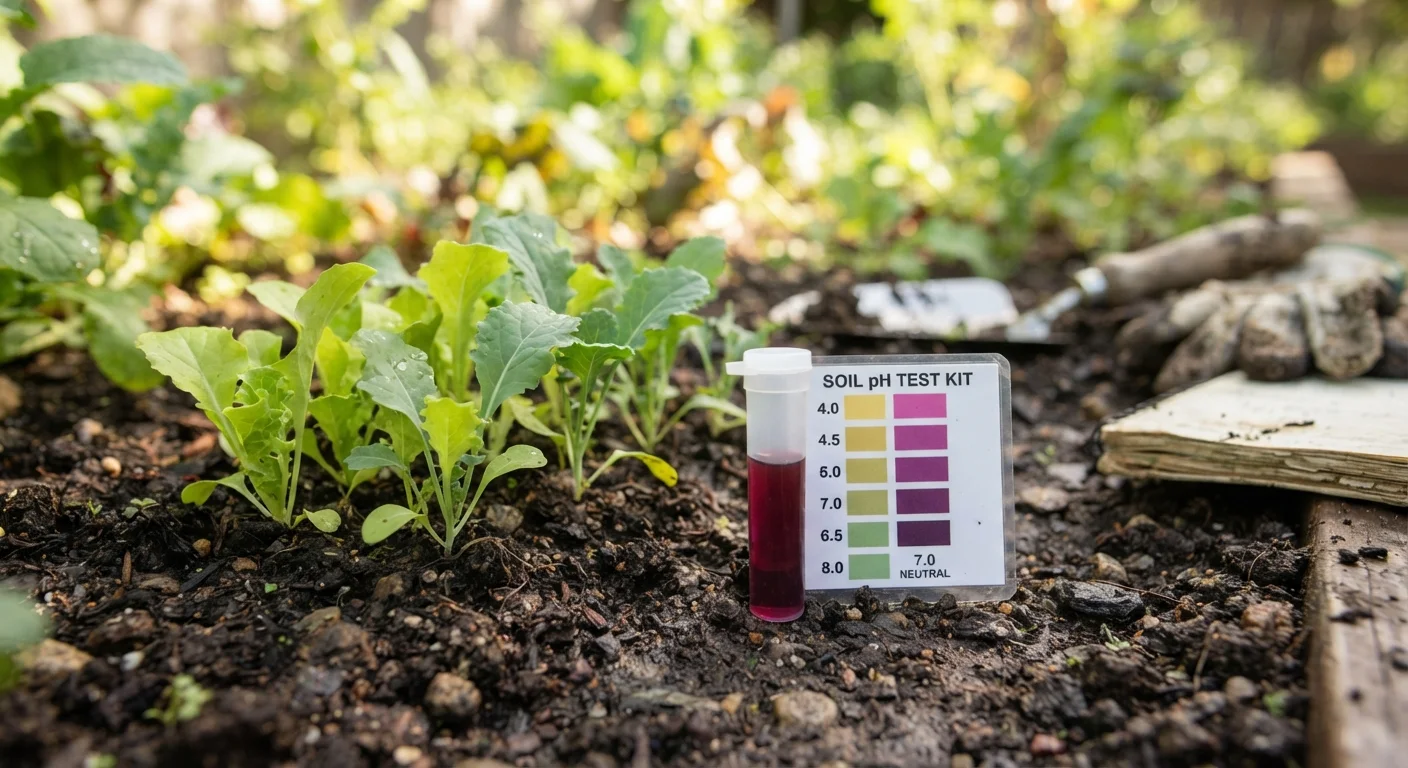
What Soil pH Actually Does for Your Plants
When gardeners talk about giving plants the right nutrients, they usually think about fertilizer. But nutrients already present in your soil can become completely unavailable to plant roots if the pH is off. Think of pH as a gate: it controls whether the soil releases iron, calcium, manganese, phosphorus, and other essential elements into the water that plant roots drink.
At a pH below 6.0, nutrients like calcium and magnesium become scarce even if your soil contains them. At a pH above 7.5, iron and manganese lock up, causing the yellowing between leaf veins known as chlorosis. In both cases, the problem looks like a nutrient deficiency - but adding more fertilizer without correcting pH often makes little difference.
Soil pH also shapes the microbial life that breaks down organic matter and keeps soil structure healthy. Bacteria that decompose compost and release nitrogen work most efficiently in near-neutral soil. Highly acidic conditions favor fungi instead, which matters for some plants but disrupts others.
“Soil pH is the master variable in soil fertility. Get it right and many other problems solve themselves; get it wrong and no amount of fertilizer fully compensates.”
— Cooperative Extension Soil Science Educators, University extension soil fertility educators, widely cited in USDA cooperative extension publications
How to Test Your Soil pH
Testing is the non-negotiable first step. Guessing your pH - or assuming it's fine - is one of the most common silent mistakes in gardening.
You have two practical options:
- Home test kits: These use color-matching strips or liquid reagents. They're quick and affordable, giving you a ballpark reading useful for most home gardens.
- Extension service soil tests: Your local university cooperative extension office (part of the USDA's national network) offers laboratory soil tests, often for a modest fee. You mail in a small sample and receive a detailed report with specific amendment recommendations. This is the most reliable method.
Collect samples from several spots in your garden, mixing them together for a representative reading. Avoid sampling right after fertilizing or heavy rain, which can temporarily skew results.
Test Before You Amend
Never add lime or sulfur based on a guess. Applying the wrong amendment - or too much of the right one - can push your pH further from the target and stress plants unnecessarily. A $15 to $20 extension service soil test gives you a precise starting point and specific amendment recommendations tailored to your soil type.
Raising and Lowering Soil pH
Once you know your pH, adjusting it is straightforward - but patience is essential.
To raise pH (make soil less acidic): Apply ground limestone, commonly called garden lime. Calcitic lime works well in most soils; dolomitic lime also adds magnesium, which benefits soils deficient in that nutrient. Spread it evenly and work it into the top several inches of soil. Most adjustments take 60 to 90 days to fully register.
To lower pH (make soil more acidic): Elemental sulfur is the most reliable amendment. Soil bacteria convert it into sulfuric acid over time, gradually dropping pH. Acidifying fertilizers and organic matter like pine needles can also contribute modest reductions over time, but sulfur works more predictably.
Always follow the application rate indicated on your amendment's label or your soil test report. Adding too much too quickly can overshoot your target and create new problems.
6.0-7.0
Optimal pH range for most vegetables
University extension resources consistently cite this range as ideal for nutrient availability in common vegetable crops.
10x
Change in acidity per pH unit
Because pH is a logarithmic scale, moving from pH 6 to pH 5 represents a tenfold increase in acidity, not a simple one-unit difference.
60-90 days
Typical time for lime to adjust pH
Most cooperative extension guidelines note that limestone amendments require at least two to three months to fully alter soil pH.
If you're starting fresh and want more control from day one, raised beds let you build a custom soil mix with a targeted pH rather than correcting existing ground conditions.
Matching Plants to Your Soil - or the Other Way Around
Not every gardener needs to chase a single pH number. A smarter approach is knowing what your soil naturally tends toward and choosing plants that suit it - then adjusting only when necessary.
Blueberries, azaleas, rhododendrons, and hydrangeas naturally prefer acidic soil in the pH 4.5 to 5.5 range. Lavender, asparagus, and many native plants perform well at near-neutral or slightly alkaline levels. Most vegetables - tomatoes, lettuce, beans, squash - land comfortably in the 6.0 to 7.0 sweet spot.
Companion planting strategies also become more effective when your soil pH isn't working against any of the plants involved. Nutrient stress caused by poor pH makes plants more susceptible to pest pressure and disease, undermining the benefits of thoughtful plant pairings.
Retest your soil at least once per season, especially after adding amendments or significant quantities of organic matter. Soil pH drifts gradually, and an annual check keeps you from discovering problems after crops have already suffered.
Frequently Asked Questions
Most vegetables prefer a pH between 6.0 and 7.0. This slightly acidic range keeps nutrients available and soil biology active. Specific crops like potatoes prefer slightly lower pH, while asparagus tolerates slightly higher levels.
Inexpensive test kits are widely available at garden centers and work by mixing a small soil sample with a testing solution or strip. For more precise results, send a sample to your local cooperative extension service, which provides detailed analysis at low cost.
Amendments like lime or sulfur work gradually. You may begin to see a shift in pH within a few weeks, but full adjustment often takes several months. Retesting after 60 to 90 days helps confirm progress.
Yes. Soil at the wrong pH can cause nutrient deficiencies that mimic disease symptoms, like yellowing leaves. Getting pH right removes one of the most common invisible stressors on plants.
Water quality can have a minor effect over time, particularly if your tap water is very hard or softened. Rainfall tends to slightly acidify soil gradually. Consistent retesting once or twice per season helps you track any drift.
No. While most plants share a general preference for slightly acidic soil, some have specific needs. Blueberries and azaleas prefer acidic conditions around pH 4.5 to 5.5, while lavender and many native plants do well in near-neutral or slightly alkaline soil.
The content on this site is for informational purposes only and is not a substitute for professional advice. Always consult a qualified professional for guidance specific to your situation.