

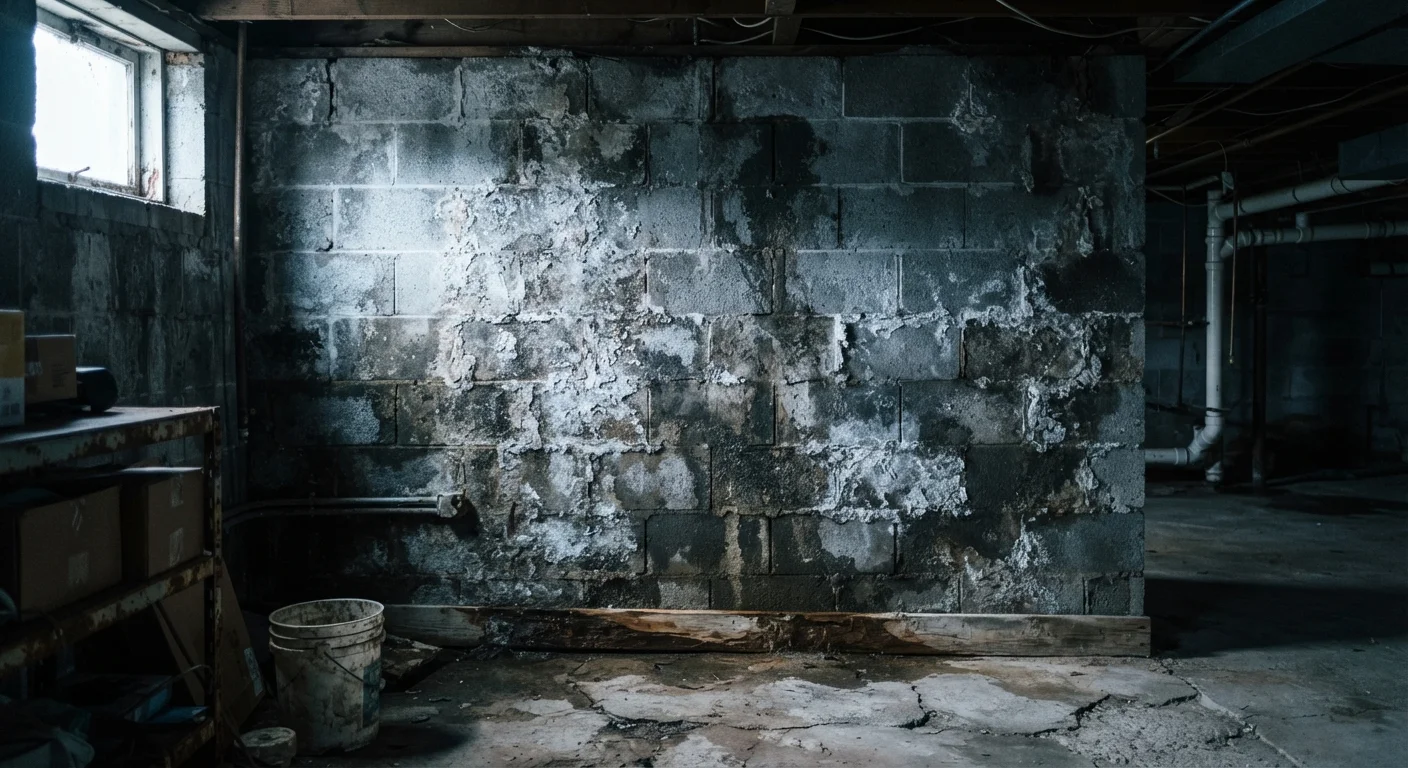
Why Basement Water Problems Keep Coming Back
If you've painted your basement walls with a waterproofing product, watched it peel within a season, and wondered what went wrong - you're not alone. Basement moisture is one of the most misunderstood problems in home maintenance, and most quick fixes fail for one straightforward reason: they address what you can see, not where the water is actually coming from.
Water enters basements through three main pathways: cracks in the foundation, gaps where walls meet the floor (called the cove joint), and through porous concrete itself under hydrostatic pressure - the force exerted by water-saturated soil pressing against your foundation walls. Until you address what's driving that pressure, no interior treatment will hold permanently.
Understanding these mechanisms is the first step toward making a fix that actually lasts. The myth-and-fact pairs below cover the most common misconceptions homeowners encounter when trying to solve basement moisture on their own. For a broader look at how small habits protect your home's plumbing system from related water damage, see this guide to preventive plumbing habits.
Myth
Applying waterproofing paint or sealant to basement walls will permanently stop water from coming in.
Fact
Interior sealants can reduce minor vapor transmission but cannot withstand sustained hydrostatic pressure pushing water through the wall.
Waterproofing paints and masonry sealants are designed for walls that are mostly dry with minor dampness. When water-saturated soil presses against a foundation - especially after heavy rain or snowmelt - the force exceeds what any coating bonded to the interior face can resist. The product delaminates, water finds its way through cracks or pores, and you're back where you started. These products have their place, but that place is not as a standalone fix for active water intrusion.
Myth
If water is appearing on the interior wall, the problem is inside the basement.
Fact
Interior wall moisture almost always originates outside the foundation, and fixing it requires managing the exterior water source.
Water that appears on interior basement walls has traveled through the foundation from outside. The visible stain or seep is the endpoint of a journey that started with poorly drained soil, a high water table, or water pooling near the foundation. Treating the interior wall without addressing what's happening outside is like mopping under a leaking pipe without tightening the joint - it manages the symptom without stopping the cause.
Myth
A dehumidifier will solve a wet basement.
Fact
Dehumidifiers manage airborne humidity but cannot remove water actively entering through foundation walls or the floor.
A dehumidifier is a useful tool for controlling condensation - the moisture that forms when warm, humid air contacts cool basement surfaces. This type of moisture is common in summer. But if water is physically infiltrating through cracks, joints, or porous concrete, a dehumidifier will run constantly, struggle to keep up, and do nothing to stop the structural source. Distinguishing between condensation and infiltration (for example, by taping plastic sheeting to the wall for 24-48 hours and seeing where moisture collects) helps clarify what you're actually dealing with.
Myth
Cracks in basement walls are normal and don't need attention.
Fact
While hairline shrinkage cracks are common in cured concrete, wider or actively growing cracks can be entry points for water and may indicate structural movement.
Concrete does shrink slightly as it cures, and fine surface cracks - typically less than 1/16 inch wide - are generally considered normal. However, cracks that are horizontal, wider than 1/4 inch, or show signs of displacement (one side higher than the other) can signal soil pressure or settling that warrants professional evaluation. Even stable vertical cracks should be monitored and sealed with an appropriate hydraulic cement or polyurethane injection, because any gap is an opportunity for water to enter under pressure.
Myth
Interior French drains completely waterproof a basement.
Fact
Interior drain systems manage water that has already entered the foundation - they don't prevent infiltration.
An interior perimeter drain (often called a French drain or curtain drain) collects water that seeps in at the cove joint or through wall cracks and routes it to a sump pump. This is a practical, widely used solution - particularly in regions with high water tables where exterior excavation isn't feasible. But it's important to understand what it does and doesn't do. It does not keep water out of the wall itself; it intercepts water after entry. For walls that are wicking moisture or supporting mold growth, additional measures targeting the exterior source are usually also needed.
What Effective Basement Waterproofing Actually Involves
Truly effective waterproofing typically combines exterior and interior strategies, depending on the severity and source of moisture. Exterior approaches - regrading soil so it slopes away from the foundation, extending downspout discharge at least four to six feet from the house, and repairing exterior drainage - reduce the amount of water that reaches the foundation in the first place. These are generally the most durable long-term solutions.
Interior drainage systems, such as a perimeter drain channel and a sump pump, don't stop water from entering the wall, but they manage water that does get in by directing it away before it can damage living space. This is a legitimate and widely used approach, particularly in older homes where exterior excavation isn't practical.
Don't Skip Permits for Drainage Work
Interior drainage systems and sump pump installations are often subject to local building codes and may require permits. Unpermitted work can complicate home sales and void homeowner's insurance claims related to water damage. Always check with your local building department before work begins, and hire contractors who pull permits as part of standard practice.
Combination approaches - improving exterior drainage while also installing interior management - often produce the best outcomes. A qualified waterproofing contractor or a structural engineer can help you identify which approach suits your foundation type, soil conditions, and water table depth. Many interior drainage installations also require permits; check with your local building department before work begins.
Moisture problems aren't limited to basements. If your home has a crawl space, similar principles apply - see what causes crawl space moisture and how it's managed for a comparison. And if you've encountered the belief that caulk or paint can seal out structural water intrusion, this article on caulking mistakes explains where those materials actually belong. For a wider look at home maintenance myths that quietly cost money, visit common home maintenance myths that cost homeowners money.
The content on this site is for informational purposes only and is not a substitute for professional advice. Always consult a qualified professional for guidance specific to your situation.