

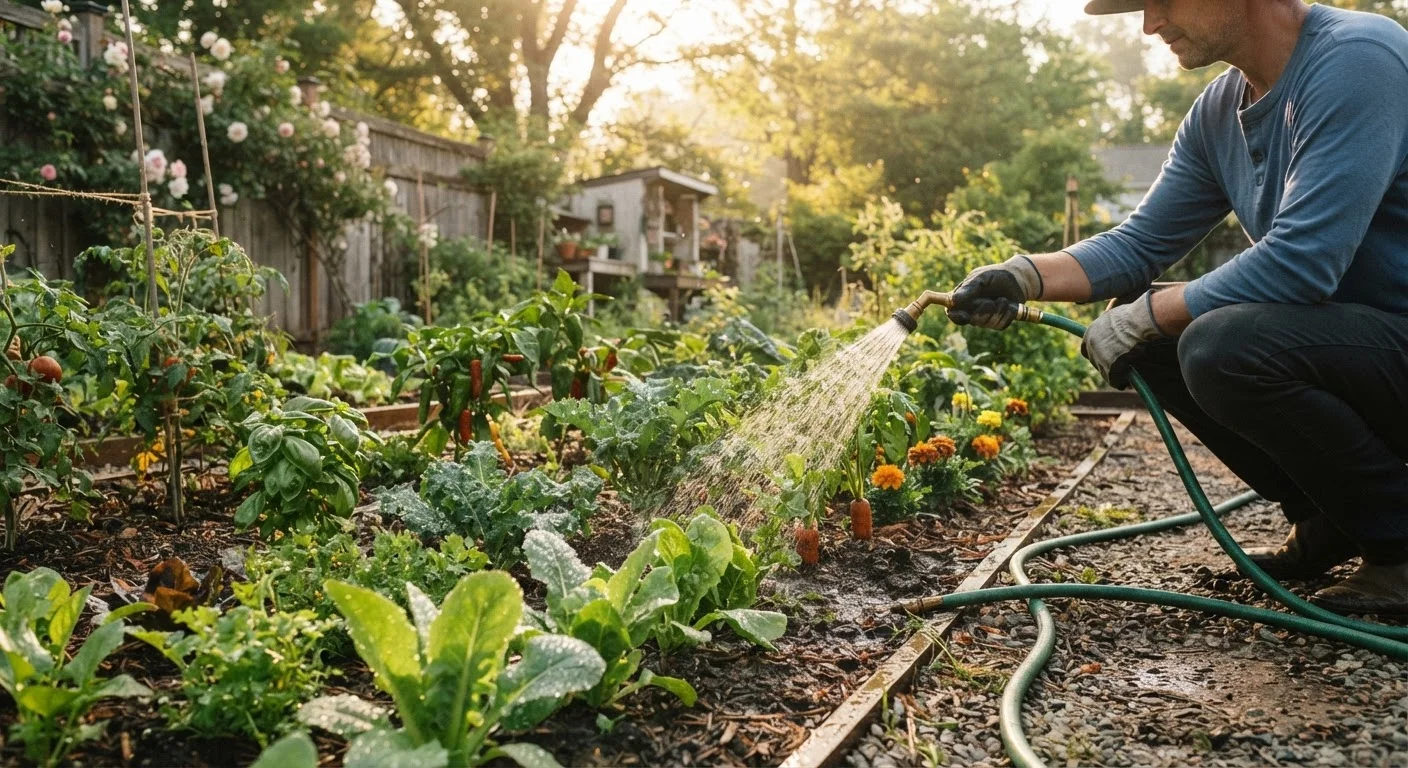
Why Watering Technique Actually Matters
Most gardeners know plants need water, but fewer realize that how you deliver that water matters just as much as the amount. Overwatering drowns roots and promotes rot. Underwatering stresses plants and stunts growth. Watering at the wrong time wastes water to evaporation or invites fungal disease. Getting the basics right - timing, frequency, and method - gives every plant a stronger foundation.
Whether you're growing tomatoes in raised beds or maintaining a mixed border, the same core principles apply. For more on how your garden setup affects plant care, see our guide on raised beds vs. in-ground gardens.
Timing: When to Water for Best Results
Early morning - roughly between 6 a.m. and 10 a.m. - is widely considered the most effective window for watering. Temperatures are cooler, winds tend to be calmer, and water has time to soak into the soil before midday heat drives evaporation. Foliage that gets wet in the morning also has time to dry before nightfall, which matters because persistently damp leaves encourage fungal problems like powdery mildew.
Avoid watering in the middle of the day when heat is at its peak and much of the water you apply will evaporate before reaching roots. Evening watering is sometimes unavoidable, but it leaves leaves wet overnight - a known risk factor for disease.
Use a Rain Gauge to Avoid Guesswork
A simple rain gauge placed in your garden tells you exactly how much water fell during recent rain, so you don't accidentally overwater after a storm. Many gardeners discover they were watering on schedule even after an inch of rainfall. Aim for roughly 1 inch of water per week from rain plus supplemental watering combined, adjusted for your soil type and climate.
Frequency: Deep and Infrequent Beats a Little Every Day
A common mistake is watering a small amount every day. This keeps only the top inch or two of soil moist, which trains roots to stay near the surface where they're vulnerable to heat and drought. Watering deeply - enough to penetrate 6 to 8 inches into the soil - and then allowing the surface to dry slightly before watering again encourages roots to follow moisture downward. Deeper roots anchor plants better and access more stable soil moisture.
How often that means watering varies significantly. Sandy soils drain quickly and may need water more often; clay soils hold water longer. A simple test: push a finger or a wooden skewer 2 to 3 inches into the soil. If it comes out damp, hold off. If dry, it's time to water. This is more reliable than any fixed schedule.
~50%
Outdoor water lost to inefficient methods
According to the U.S. Environmental Protection Agency, roughly half of outdoor water use is wasted due to evaporation, wind, and overwatering.
6-8 inches
Target soil depth for deep watering
Horticultural guidance from university extension services generally recommends watering to at least 6 to 8 inches to promote deep, resilient root systems in most vegetable gardens.
Plants at different life stages also have different needs. Seedlings and newly transplanted starts need more frequent watering until their root systems are established. Mature, established perennials are generally much more drought-tolerant. Our guide to annuals and perennials covers how plant type influences ongoing care.
Method: Getting Water Where It Counts
The delivery method determines how efficiently water reaches roots. Overhead sprinklers are convenient but wet foliage and lose a significant percentage of water to evaporation, particularly in warm or windy conditions. Drip irrigation and soaker hoses deliver water directly to the root zone at low pressure, reducing evaporation and keeping leaves dry. They also make it easier to water consistently without over-applying.
For gardeners who hand-water, using a wand or a hose with a gentle head and directing flow toward the base of each plant - rather than spraying leaves from above - comes close to matching the efficiency of drip systems. Our detailed comparison of drip irrigation vs. sprinkler systems can help you evaluate a longer-term setup.
Adding a 2- to 3-inch layer of organic mulch - straw, wood chips, or shredded leaves - around plant bases is one of the most effective ways to retain soil moisture. It slows evaporation, moderates soil temperature, and reduces how often you need to water. It also suppresses weeds that compete with plants for water and nutrients. For more on soil health fundamentals, see why soil pH matters.
Reading Your Garden's Signals
Plants communicate water stress fairly clearly if you know what to look for. Wilting in the morning - before temperatures rise - often signals underwatering. Yellowing lower leaves with soggy soil can indicate overwatering and root stress. Crispy leaf edges on otherwise green plants may point to inconsistent watering rather than drought.
Wilting Doesn't Always Mean Drought
Some plants - squash and large-leafed vegetables in particular - wilt noticeably in afternoon heat even when soil moisture is adequate. This is a temporary response to transpiration stress, not necessarily a sign they need water. Check the soil before adding more water; watering soil that's already moist can cause root rot.
Getting watering right is an ongoing practice, not a one-time fix. Seasons change, plants grow, and rainfall is unpredictable. Building the habit of checking soil moisture rather than following a rigid schedule puts you in a much better position. And as your garden evolves - adding new plant combinations or companion groupings - revisit your watering approach accordingly. See how plant relationships affect overall garden health in our companion planting guide.
“The single most common cause of plant failure in home gardens is improper watering - usually too much, too often, and at the wrong time of day. Learning to read the soil rather than the calendar changes everything.”
— Cooperative Extension Horticulture Educator, University Cooperative Extension Service, general guidance summary
The content on this site is for informational purposes only and is not a substitute for professional advice. Always consult a qualified professional for guidance specific to your situation.