

Our Verdict
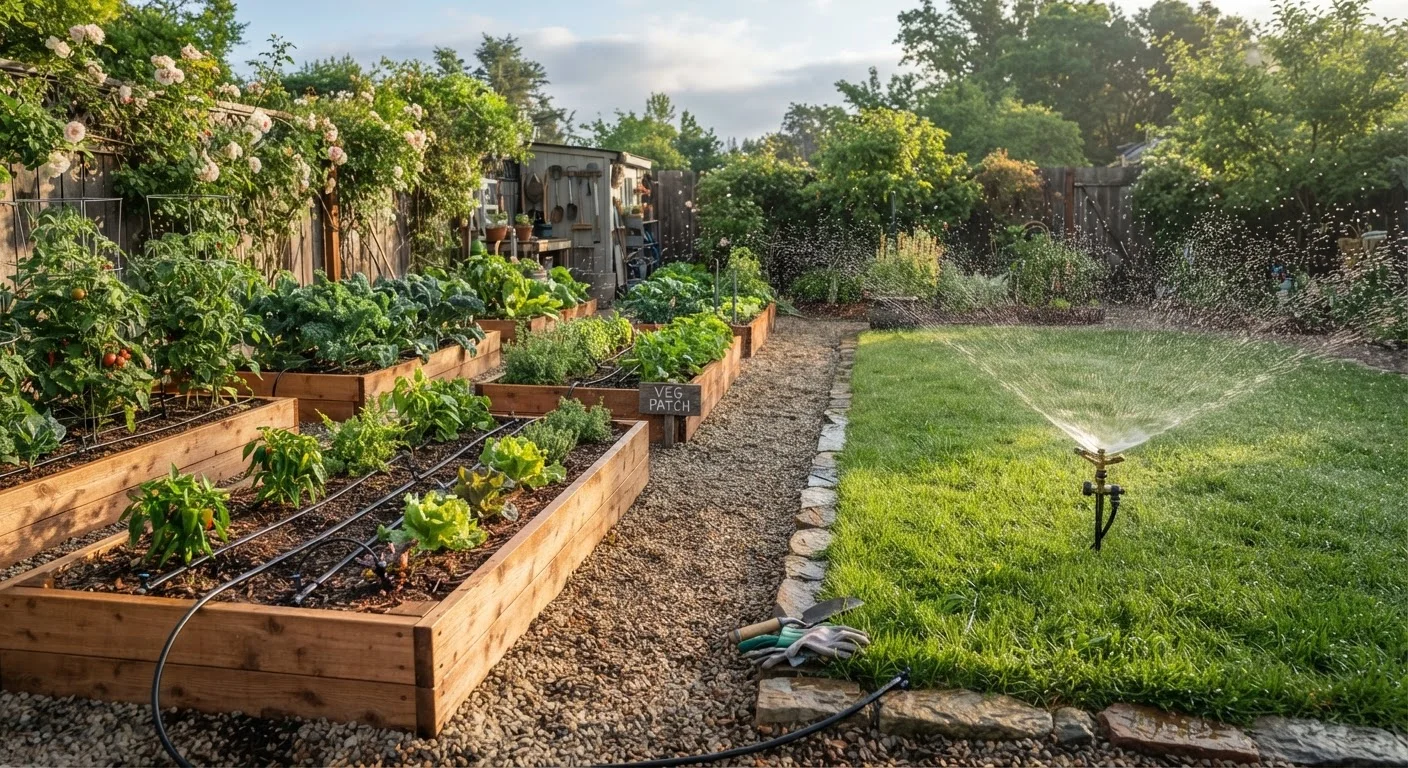
Drip irrigation and sprinkler systems each serve distinct garden types well. Drip excels in water efficiency and precision for vegetable beds, container gardens, and drought-sensitive landscapes. Sprinklers work better for lawns and large open planting areas where broad, even coverage is the priority. Many homeowners find that using both-drip for beds and sprinklers for turf-delivers the best results overall.
| Best for | Recommended |
|---|---|
| Vegetable gardens, raised beds, and drought-prone yards | Drip Irrigation |
| Lawns and large, open planting areas needing broad coverage | Sprinkler System |
| Gardeners with mixed yards and water-efficiency goals | Combination of Both |
How Each System Works
Understanding the basic mechanics of each system helps clarify where each one thrives.
Drip irrigation uses a network of low-pressure tubing and small emitters laid at soil level or just below it. Water is released slowly and directly at each plant's root zone, minimizing the amount that evaporates or lands where no plants are growing.
Sprinkler systems distribute water through pressurized heads that spray water into the air over a wide area. They can be in-ground (pop-up heads connected to buried pipes) or above-ground (portable hose-end sprinklers). In-ground systems are the most common upgrade homeowners consider for lawns and large beds.
For a deeper look at watering timing and technique that works alongside either system, see Watering Your Garden Well: Timing, Frequency, and Method.
Comparing the Two Systems
The table below breaks down how drip irrigation and sprinkler systems compare across the factors that matter most to home gardeners.
| Drip Irrigation | Sprinkler System | |
|---|---|---|
| Water Efficiency | Very high - targets root zone directly | Moderate - loses water to evaporation and drift |
| Best Plant Types | Vegetables, shrubs, container plants | Lawns, ground covers, large open beds |
| Upfront Cost (DIY) | Low to moderate for small gardens | Low for portable; high for in-ground |
| Installation Difficulty | DIY-friendly for most homeowners | In-ground requires trenching or pros |
| Foliage Wetting | Minimal - reduces disease risk | High - can promote fungal issues |
| Coverage Area | Targeted - best for defined beds | Broad - covers large areas quickly |
| Automation Options | Timer and sensor compatible | Timer and smart controller compatible |
| Maintenance Needs | Emitter clog checks; seasonal flush | Head alignment; winterization needed |
One nuance worth noting: in-ground sprinkler systems generally require professional installation and permits in many municipalities, while basic drip systems are well within reach as a DIY project. Check your local codes before starting either project.
Water Efficiency and Plant Health
Water efficiency is where the two systems diverge most sharply. Drip irrigation typically applies water at 90-95% efficiency because so little is lost to evaporation or runoff. Sprinklers, by contrast, can lose a meaningful portion of water to wind drift and evaporation, particularly when running during midday heat.
From a plant-health standpoint, drip irrigation keeps foliage dry, which reduces the risk of fungal diseases like powdery mildew and leaf blight-common problems in vegetable gardens. Sprinklers wet both soil and leaves, which is fine for lawns but less ideal for fruiting plants such as tomatoes, squash, and peppers.
Run Your System Early in the Morning
Whether you choose drip or sprinklers, watering in the early morning gives plants time to absorb moisture before midday heat increases evaporation. It also allows foliage to dry out before evening, which helps reduce fungal disease pressure. Most programmable timers make early-morning scheduling simple to set and forget.
If you're planning a vegetable garden alongside your irrigation decision, our guide on Starting a Vegetable Garden from Scratch covers site selection and plant spacing that will influence which system suits you best.
Cost and Installation Considerations
For most homeowners, budget is a real factor. Here's a general picture of what to expect:
- Drip irrigation kits for a small to mid-sized garden bed typically range from around $30-$150 for DIY setups. Expanding to multiple beds adds cost but remains manageable.
- In-ground sprinkler systems generally involve higher installation costs, especially when trenching and professional labor are needed. Above-ground portable sprinklers are far cheaper but require more manual involvement.
- Automation (timers and smart controllers) adds cost to either system but pays back in convenience and, in the case of drip, water savings over a season.
Both types of systems connect to your home's outdoor water supply. Maintaining healthy water pressure and connections is important for either to perform properly-see small plumbing habits that prevent expensive repairs for tips on keeping outdoor spigots and connections in good shape.
If you're also deciding between raised beds and in-ground planting-which directly affects how you'd route irrigation-Raised Beds vs. In-Ground Gardens walks through the tradeoffs.
Choosing What's Right for Your Garden
Neither system is universally superior. Your decision should rest on a few practical questions:
- What are you growing? Vegetables, herbs, and shrubs favor drip. Lawns and ground covers favor sprinklers.
- How large is the area? Drip is cost-effective for defined beds; sprinklers handle open expanses more efficiently.
- What are your local water restrictions? Many drought-prone regions encourage or incentivize drip irrigation. Check with your local water utility.
- How much maintenance are you willing to do? Drip emitters can clog and tubing can shift; sprinkler heads can break or misalign. Both need seasonal checks.
Many gardeners ultimately use a hybrid approach-drip tubing in planted beds and a separate sprinkler zone for turf areas. This lets each system do what it does best without compromise.
The content on this site is for informational purposes only and is not a substitute for professional advice. Always consult a qualified professional for guidance specific to your situation.